Showing posts with label Rabat. Show all posts

Saturday, June 4, 2011

Gliding along the Newest Novelty


I don't fully believe that 7 Dirhams (MAD, about 85 cents) gets me anywhere in the two cities, but that's what my perforated paper ticket implies. Today's my first trip on the newly opened Rabat-Sale tramway since its San Fransisco-style trolley bells began ringing just last month.

According to its website, Rabat and Sale have entertained thoughts of developing a public transportation system for over 30 years. In February 2007, they awarded a contract to realize the plans by rail in 2010 and, after being delayed a year, two lines recently opened to a waiting public.


The project seems large for the size and pace of the cities but should help connect the various neighborhoods and shuttle travelers to a quick exit via one of the city's main train stations.  Operating along 19 km of track through 31 stations, 23 trains can run at once, each carrying up to 580 passengers.

The station next to my place is nice. Open to its surroundings aside from a handful of covered benches and lined with a couple of automatic ticket booths and a small, manned ticket window about half the size of one of his automated counterparts, the Agdal stop is elevated about a foot above the one-way streets that cut past it on both sides.

At a quarter past eight in the evening, the sun's been below the neighboring rooftops for some time, allowing the thirty of us waiting passengers to stand out from under the canopies without getting roasted by May's intense rays while we wait for the next north-bound train.

Those waiting around me don't look like what runs in my head as typical American tram passengers, which is to say they don't predominantly look poor (or lower middle class) and at least half are women.  Then again, this is the city's shopping district, so I shouldn't be too surprised that passengers' clothes are respectable and their demeanor's civil.

After about five minutes, I've waited longer than expected and look more eagerly to the south as my dinner date's start time approaches. As if my mind was read, a whiff of rotten trash is accompanied by the sight of a modern train turning the bend. I hope this ride's quicker than my two bus rides four months ago.

A well-dressed attendant carefully tears my ticket after I fold down a cushy red seat from its upright position. Solid, firm, still new. Underway by 8:30, we jerk along Rue Fransa, waiting for car traffic to figure itself out ahead of us. After a short time, the sweet voice of a young female echos through the cabins announcing the upcoming station, in Arabic only.

My part of the car's vacant save for me and a young woman seemingly ignoring everything around her a couple seats to my right. Sitting along the wall, the rearward cars to our left are more crowded and have permanent bench seats that face forward and backward like a real train car.  Their occupants look satisfied, if not disinterested and bored.

Some quick math tells me 7 MAD is about the same rate or less than a taxi to the same place (testing this theory, a cab back later cost 15 MAD); however, I know it's certainly cheaper than taking a cab from the southeastern part of Rabat to the northwestern side of Sale. Slightly more expensive than a bus, this thing's smoother, less crowded and - so far - much faster than the city's alternate means of public transportation.

Station stops are quick and painless as our middle-aged and neatly-trimmed attendant automatically collects new tickets and welcomes their holders.  Arriving to my destination after a short ten minute glide, I'm impressed by Rabat-Sale's newest novelty.  Not needing to find a spot to park, I'm on my way to the restaurant interested to see if my friends agree.

Friday, May 27, 2011

Bessey Tour and Guide (Part 2 of 6)

Growing up, I didn't inherit a lot of my old man's interests.  A quiet guy who preferred to spend his days off sitting in cool autumn breezes waiting for whitetail deer to pass his way, my dad spent countless hours most other days pursuing his father's professional dream of building a tool and die business.  With one of my uncles, they started Bessey Tool & Die in 1988, and my dad's run the company since my grandfather's passing in 1996.

I'm described as many things, but "quiet" scarcely makes the list; hunting never took, and my choice of profession skewed from tool making.  As a result, there haven't been a lot of opportunities to share with my dad one of the traits that I think I inherited from him: my ability to plan and put something together.  Hopefully, he and the rest of my family enjoyed the two weeks I put together for them and don't need too much of a vacation from their vacation before they return to work on Tuesday!

If you ask me, the vacation ended in the north as well as it began in Rabat, with some pretty interesting moments in between.  Starting in the country's capital made a lot of sense, allowing for some rest and jet-lag recovery while easing my guests into my current hometown and Muslim culture.  Also, the city's calm nature might give them something to later compare Marrakesh's potential craziness.

The Rabat segment included a few familiar sites for followers of this blog.  The main highlights again included Chellah, The Tour Hassan and La Oudaya.  Complimenting them, drives past Parliament, the Royal Palace, National Library and Mohammed V University provided a glimpse of the current political and educational systems.  However, the introduction to driving in this country may have made a larger impact on my guests than any of these sites, as my sister describes it:


Being it our initial exposure to Morocco (aside from the altogether frightening drive with Dad from the airport)...I'm still surprised that we didn't A) knock a parent/child pair off a bike, or B) get crushed on both sides attempting those dastardly turn arounds.


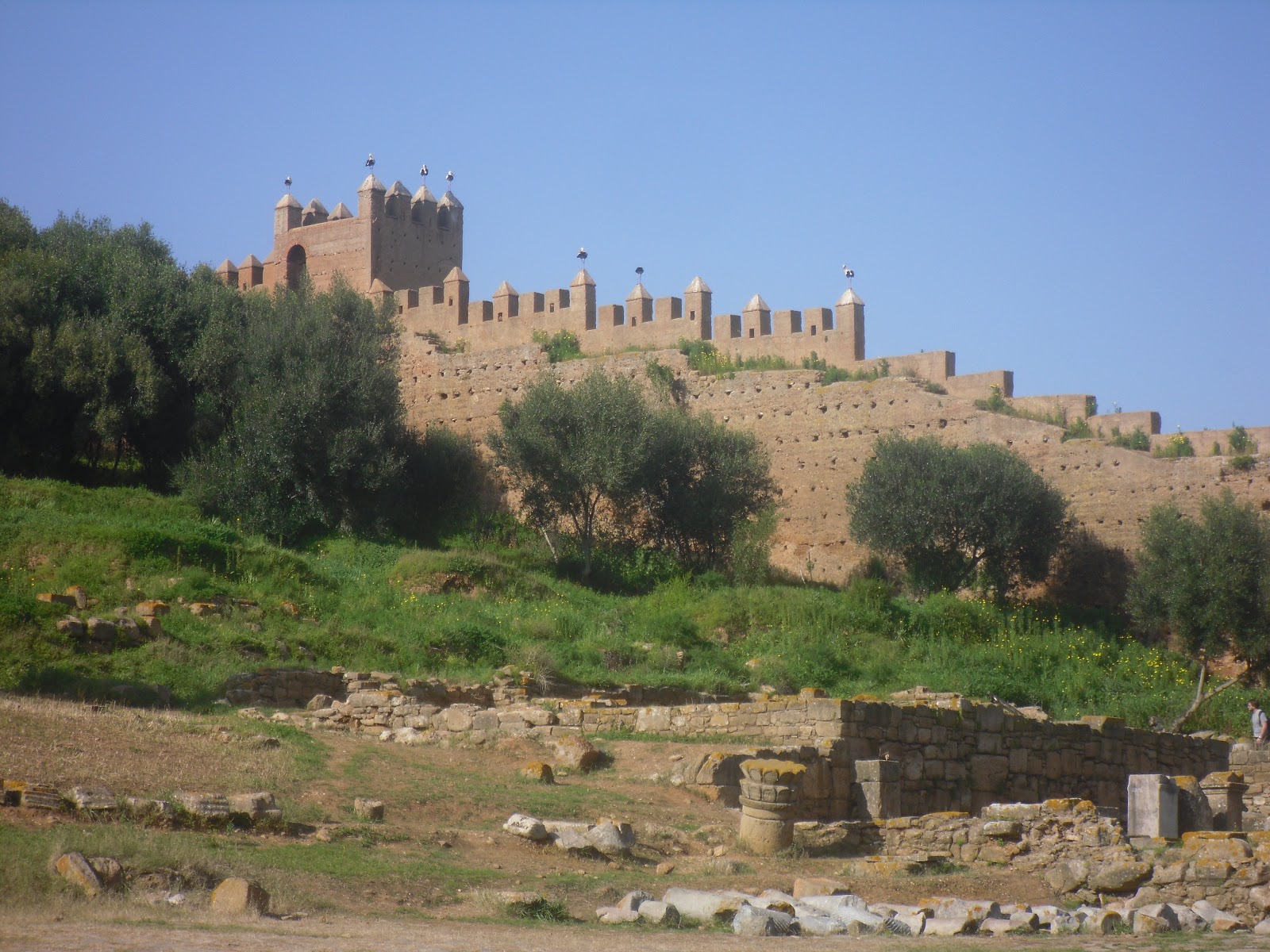
After a much less terrifying drive (hopefully), our first stop was the ruins of Phoenician-found Chellah.  Later occupied by the Romans in 40 AD and then the Merenids in the 14th century, most of what remains today is from the latter.  Cats, storks and eels are today's inhabitants, so my animal-loving sister and mother enjoyed them almost as much as the blooming gardens.

Throughout Rabat, Marrakesh, Fes and Agadir, a different type of "purple haze" lines the streets.

On the Roman side, a few words from the unofficial guide.

The Merenid Minaret.  As my Sister, Megan, put it, "To my pleasure, Chellah, the Mausoleum, and the Tombs were right up my alley! Old, historic, and not too hectic, they were a smooth introduction to the vacation. Not too much to say here that you haven't said about the sights in the past - they were very cool and filled with sleepy stray cats!


One of the few remaining Roman artifacts not moved to the Archeological Museum.

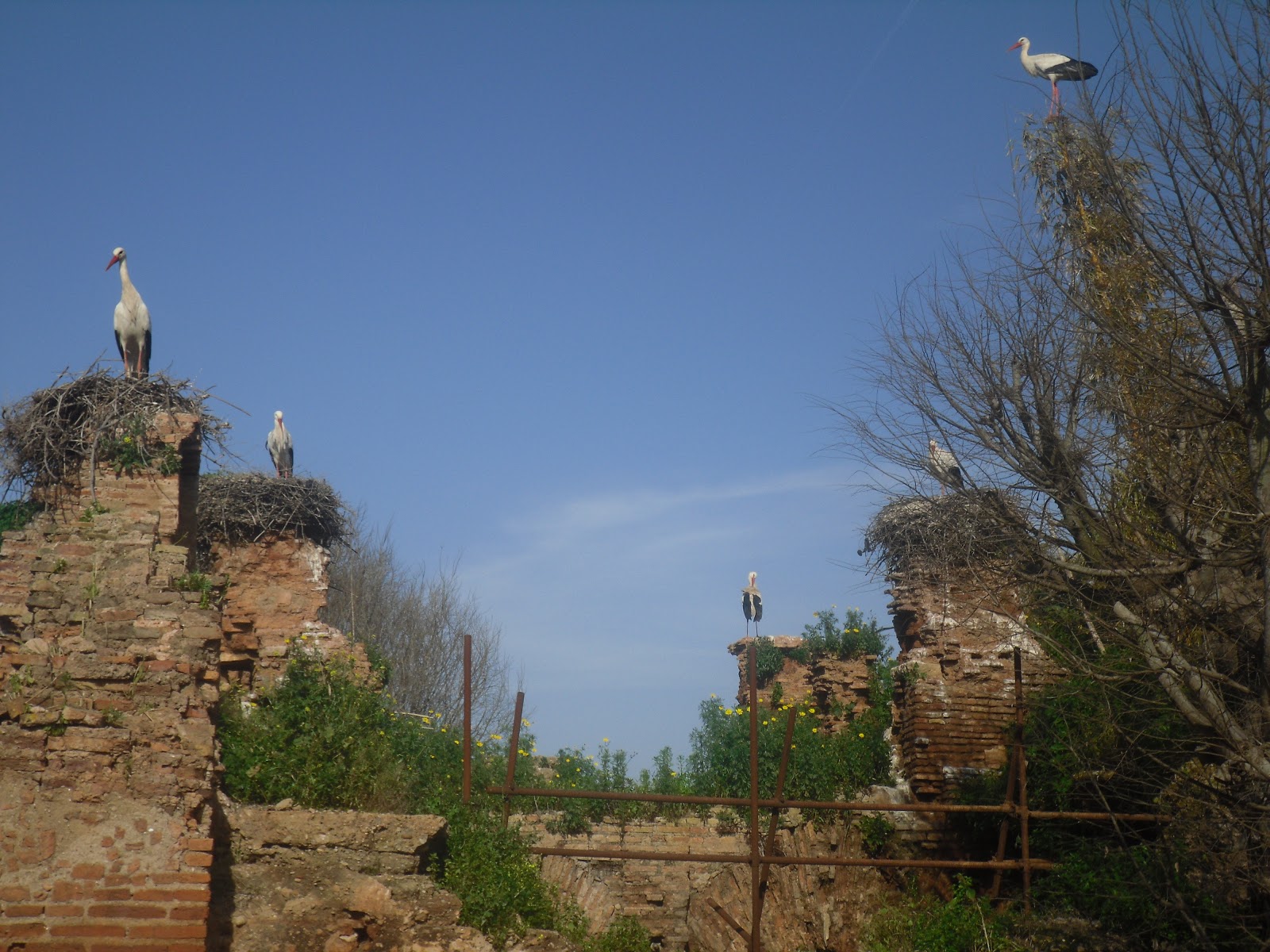
Baby storks huddled in most nests in each of the large cities.

The myth is that if women want to bear child, they should feed eggs to the resident eels.  No one from our group must have been interested, as the one eel we saw wasn't biting on any of the dozen eggs it was fed.

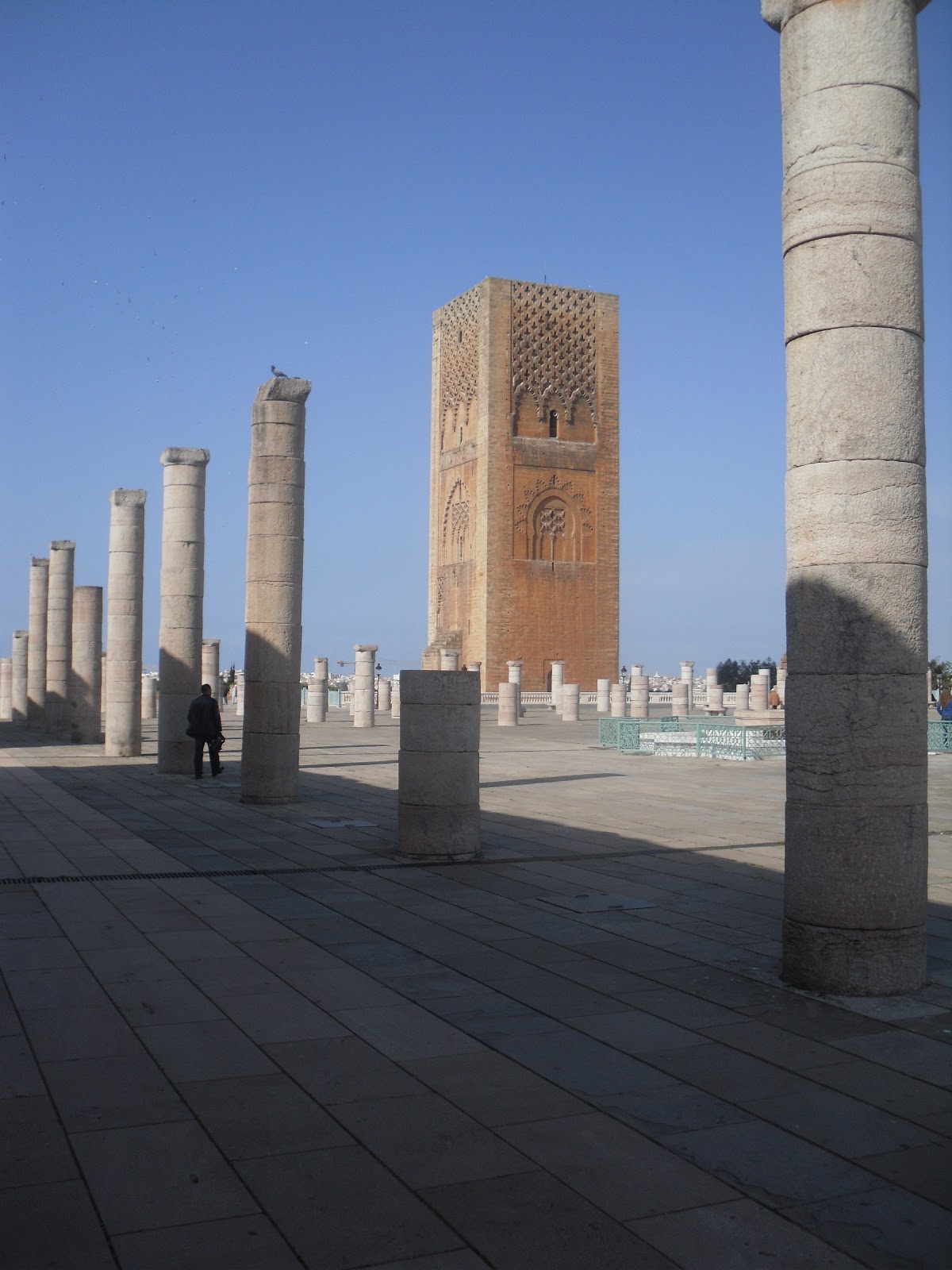
The Tour Hassan was our second stop.  Built by the Almohads to resemble the Koutoubia minaret in Marrakesh, it was the site's prominent feature until the Mausoleum of Mohammed V was dedicated as the final resting place of the current monarchy's first king.

The minaret dominates the city's skyline as well as the country's Tomb of the Unknown Soldier resting at its base.

The Mausoleum's Ceiling: A Tremendous Display of Ornamentation.

On one side, Guards post in white; on the other, the horses and their mounts are adorned in brown.

The Beginning of Father's Photography.

The Sun was in full effect, requiring a stop at the "Local Drinking Fountain."

La Oudaya completed the first day's activities.  Also built by the Almohads, this 12th century kasbah is home to the city's oldest mosque as well as a small part of its population.  Adorned by a garden and offering a pleasant overlook of northern Sale, this area taught my mom and sister what happens when you're not assertive.

The Hand of Fatima adorns most entrances along the blue-painted alleys to ward off the Evil Eye.

Grandma Rose in front of some Garden Flowers.

Spring in Bloom.

"I didn't buy anything!" was the first thing my mom quipped to my dad as she and my sister were corralled to him by a couple of young henna artists who reportedly, "told us that they just wanted to see our beautiful hands," and then started stenciling artwork before anything drastic such as walking away could be done.  Welcome to Moroccan bargaining!  Megan adds: "I'd rather not get into the whole 'henna' debacle - but let me just say for the record that I'm way too nice to live in a country like Morocco!"

One of the tranquilly-pleasing Oudayan Alleys.  Megan agrees, "Oudaya was beautiful as well - the blue and white walls felt very appropriate for a town so close to the beach. It was interesting to see a town so different from what I'm used to in the USA, with the tight winding paths through the buildings (though it wouldn't be the first that we saw of that!)."

After a few hours, the initial exposure concluded and it was back to the apartment for some rest and preparation for the first - and biggest - trip of the vacation.  Spanning five days and including the most diversity of any part of the visit, Marrakesh and the desert would test some limits.  Until then, for more of Chellah, The Tour Hassan and La Oudaya, click here, and thanks, sis, for the comments!

Not to be dismissed but not finding a place in the overview, we now have "Our Hail of Bullets:"
  • Home-cooked food has been missed, as I was reminded by sloppy joe's, egg and bacon breakfasts and brats.
  • The tramway's open in Rabat!  After months of delays and undoubtedly years of planning and construction, the new public transportation not only looks good but also increases the time to travel along it by car tenfold.
  • The Jazz Festival in Rabat is huge, playing in at least four alternate sites over the weekend.
  • Rabat's main attractions (Chellah, the Tour Hassan and La'Oudaya) are not that interesting the fourth time around (as you may agree!).
  • After my father's recent vehicular accident, navigating our vehicle in Morocco nearly gave him a heart attack, but he did great.
  • No protests or demonstrations were witnessed, but a trash strike cluttered a couple alley ways toward the end of the trip.
For those interested in putting something together like this, I offer you my "Planning Factor of the Day:"

Putting Together an Itinerary: After a handful of emails elliciting destinations, I quickly found that my family decided to take two weeks to see the country for good reason - they wanted to see it all: the desert, coast, mountains and big cities dominated their responses.

The four mini-trips that I later decided on quickly began to come together in my head.  The first would stay in Rabat, be a low-key trip around the city's sites, allow for some jet-lag to pass and some acclimatization to occur.  The southern trip to Marrakesh and the desert next came to mind because it would be the most difficult and diverse, giving my guests a Moroccan "slap in the face" that would shock the senses and test their still-fresh physical limits.  Including the tourist city, a pass over Morocco's highest road as well as the desert, this trip would span a handful of days amidst diverse ethnic lines.

Requiring at least a day of rest afterward - and a shorter trip, I looked to Fes and the Middle Atlas for the second destination.  Here, the focus would be on historical Morocco and its cultural and religious center.  Further, the difference between Fes and Marrakesh would be highlighted, as the former's more laid-back environment and medina would contrast the latter's hectic pace and nightlife.  A stop to the country's most preserved Roman ruins would also expose another aspect of the country's history, while a visit to my future university would give them a glimpse into my future.

After another day of rest, the trip would conclude in the north, with stops to "The International City" of Tangier, one of Spain's African hamlets, Sebta, and the old Spanish protectorate's capital in Tetouan.  Later, a stop to Moulay Boussalham's bird sanctuary would be added to appease the nature - and boat - lovers' exposure to one of the country's overlooked sanctuaries.  The visit nearly went as planned, minus the stop in Tetouan, which was cut due to a lack of time and desire to get back to Rabat and pack for the next day's early flight.

Thursday, May 26, 2011

Worth its Weight in Gold (Part 1 of 6)

Silence is golden.  I can't remember the first time I heard the expression or the last time I've used it, but it seems appropriate to describe the feeling of being "off-line" over the past couple weeks.  The reason: I've spent the past fourteen days with the people most important to me over the years (save my brother and my woman): my family.

Day One of the Moroccan Vacation: (from left) Al, Grandma, Mom, Dad, Megan

The six of us able to make the trip kept busy seeing sites new and old courtesy of a well-used rental van and strategically-place "Ibis" hotels and started to familiarize with Morocco by guidebook, well-intentioned guides, other tourists and helpful locals across the country.  Broken into four mini-tours to the country's capital, south, middle and northern areas, my family's orientation to "my second country" was a compilation of contrasts that mirrored the country itself.

Part of the Rif Mountains towering over the Mediterranean.

Between rumbling up and down four different mountain ranges and cruising along two different coasts, we were drenched in cold rain atop camel while exiting the desert and baked under an unrelenting sun during a bird-watching boat ride.  Locals brushed by us in unending waves by foot and atop motor scooter and donkey cart one day while only waves of golden sand scurried by us another.  Good food and bad, smooth drives and treacherous river crossings met us along the way.

One of the First Trucks willing to forge the gushing spillway we later crossed atop a Flatbed Wrecker.

Our schedule was ambitious (as you'll see shortly), and I'm proud of the way my guests kept open and interested minds amidst the different culture and traditions they all experienced for the first time.  But, if I've taken anything away from this trip, its a little motivation after seeing my grandmother and her husband, Al, make it through every part of the visit.

"The Silvers" (as they were affectionately referred to), looking for signs of Hercules in his rumored Grotto.

If I even make it to my eighties, I hope to just continue breathing, hold my bowels and get some visits from the people in my life, much less travel across an ocean, hop on a camel for four hours, climb countless kasbah stairs and sit in the back (back) seat of a broken-in, manual van for ten days (and close to forty hours).  Thanks for the inspiration you two - you did great!

In a nutshell, here's what we did and what you can look forward to in the next few postings!  The format is: Trip Number/Day, City: Sites or Brief Description.

1/1, Rabat: Chellah, The Hassan Mausoleum, Tombs of Hassan II and Mohammad V, Oudaya.

2/2-3, Marrakesh: Jamaa L'Fna, Koutoubia Mosque, Museum of Marrakesh, Ali Ben Youssef Madrasa, Kouba Ba'adin, Carriage Ride, Majorelle Gardens, Carriage Ride, Saadian Tombs.

2/3, Tizi n'Tichka: Drove over the Highest Mountain Pass in Morocco.

2/3, Ait Benhaddou: Walked up to the Kasbah from Gladiator, Jewel of the Nile, Lawrence of Arabia, Jesus of Nazareth, and others.

2/3-4, Ourzazate: Atlas Studio Productions Tour, Movie Museum of Morocco, Kasbah Taourirt from Star Wars.

2/4, Dra'a Valley: Towns of Agdz, Zagora (52 Days to Timbuktu), Palm Tree Wadis and Rolling Mountains.

2/4-5, M'Hamid: Erg Chigaga Desert and Camel Tour.

2/5, Tazenakh: River Crossing atop Flatbed Wrecker.

2/5-6, Agadir: Beach, Port, Saadian Kasbah and City Overlook.

2/6, Essaouira: Beach, Mogador Island.

2/6, Al-Jedida: Coast (drove thru only).

3/8, Volubilis: Largest and most Preserved Roman Ruins in Morocco.

3/8, Meknes: Imperial City under Moulay Ismail (drove thru only).

3/8-9, Fes: Bab Bajloud, The Old Medina, Cafe Clock, The Water Clock, The Bou Inania Medrasa, The Art d'Bronze, The Wood Workers' Alley, The Small Tanneries, The Metal Workers' Alley, The Qaraoiyn Mosque, David and Gaelle's Place, The Barj Nord and Weapons Museum, The Merined Tombs.

3/9, Ifrane: Al-Akhawayn Universtiy, The Stone Lion.

4/11, Moulay Boussalham: Merja Zerga Bird Sanctuary.

4/11-12, Tangier: Small Port, Cap Spartel, Grotto of Hercules, Hafa Cafe, Grand Socco.

4/12, Sebta (Spain): Spanish Fort, Plaza of Africa, House of the Dragons.

4/12, Tetouan: Old Spanish Capital (drove thru only).

Given this itinerary and the limited number of guides used throughout it, I consider myself "tour-qualified."  Feel free to make a trip over here and see this great country for yourself!

Tuesday, April 26, 2011

Three Months in the Rear View

A quarter of my first year abroad has passed, and it did so slower than I imagined.  For all that I've heard about how time flies and the two and a half years "will pass before you know it," I have to admit that the first three months haven't felt like it.  I suppose this is the first point of my quarterly review.

For the remainder of this post, I'll take a look at a few of my initial goals and stand them up against how they've transitioned from "planning" to "doing."  These goals regard language proficiency, travel, socialization (meeting people), academics (understanding national and regional politics and history) and my profession (keeping up with being an Army officer).

These initial three months were the first of two "unstructured" quarters prior to beginning my advanced studies at a Moroccan university.  No set timelines; no bosses; just me making the most of my time abroad.  Prior to beginning this unchartered period, my goals were limited, focusing on language proficiency, traveling and socialization.

More specifically, I wanted to become familiar with the local dialect, continue my understanding of Arabic and travel around the country (and part of Europe) to see the cultures and begin interacting with people.  During this time, however, I took stock of my unique situation and set two more goals.

First, I added an academic goal: Understand the local and regional history and current political climate in order to assist my transition to the university in the fall.  Second, and professionally speaking, I sought to get back in shape.  Though neither of these were ground-breaking given my situation, I've structured them a little more than originally intended and feel they warrant a little attention.

Bottom line: I don't feel that I've met my language goals; however, I think I've met or exceeded my travel, socialization, academic and professional goals.

(1) Language proficiency has been difficult.  Some of this has been self-induced; some of it has been a result of this unique country and my prior training.  At the onset, I wanted to sustain my level of Arabic proficiency, begin to understand the local dialect (Darija) and begin to familiarize myself with French.  I've done none of them to the level I wanted.

On my own accord, I've not sought opportunities to practice speaking Arabic with the locals as much as I could.  To keep up the speaking part of my language proficiency, I've tended to predominantly speak with cab drivers, restaurant staff and private instructors.  Having my own vehicle has limited my exposure to the first set while my desire to get back in shape (and subsequently diet) has curbed the number of the second group.  Not wanting to pay out of pocket for private instruction has subsequently decreased the third set.  This hasn't been by design or all-inclusive.  I've improved my speaking abilities in some areas, such as fluency and pronunciation; however, my vocabulary has decreased.  If your reading this as a future scholar and language is your most important goal, seek out like-minded local nationals more vigilantly than I have!

Regarding the situation, it's just been difficult to find people with whom to speak in Arabic.  No one in the streets appears to speak it unless they're making fun of a news broadcast or doing their equivalent to our snobby British accent.  Darija or French are the staples but have been a bridge too far for me to comprehend up to this point.  With my shrinking Arabic vocabulary, I've decided not to pursue learning them after my brief four-week Darija orientation (which was still quite helpful).  Future scholars may benefit from having a basic understanding of the dialect prior to arriving in an Arab country.

In terms of prior training, I don't believe that the program of instruction in Monterey was most beneficial for future foreign area officers or those studying abroad.  There are numerous reasons, but the primary one is the lack of emphasis on speaking that I encountered.  From my estimate, the course was primarily designed not for the speaker but for the linguist, who requires a different skill set.  Though a great course for the linguist, I would recommend that future scholars study Arabic in a different setting prior to beginning their time abroad, if possible.

(2) Traveling has been my highest priority and the one goal that I believe that I've met thus far.  For the first month, I wanted to be familiar with my host city, Rabat.  Complete.  For the second month, I wanted to travel to each corner of the country and see the big cities.  With the exceptions of two corners: complete.  For the third month, the goal was to branch to Europe and revisit Moroccan areas of interest.  Complete.

There are two causes for this high priority.  First, I prefer to do and experience rather than read and theorize.  Why read about these places when you can go to them?  Second, I've not traveled a lot and feel the NEED to get out there.  Not having any travel to Africa or Europe under my belt prior to this experience aside from a short time spent in Germany has made the decision to travel all the easier.  Further, this "unstructured" time is sandwiched between long periods spent "in the books," making the option to travel more guilt-free.

(3) The socialization goal has been a little trickier to gage.  As a rough estimate, I've had mixed successes with getting to know people and establish lasting relationships.  With American and European ex-patriots, I've had more success than anticipated.  It's been easy to find and get to know the various flavors of fellows, travelers and workers here in Rabat.  Most fascinating is the range of motivations and goals that have brought them here.

Less successful, as I've alluded to before, has been my ability to meet locals with whom I've been able to maintain relationships.  Reasons include my irregular schedule, the Arabic / dialect divide and a general common interest gap.  At this point, however, I'm not extremely worried because I've begun reaching out a little more and only see my affiliation growing with local groups over the summer.  Further, the university will provide a common setting for group interaction in the fall.

(4) Regarding my new-found academic goal, I feel that my written and reading language proficiency, travel and this blog have assisted me in obtaining it over the past couple of months.  The first two factors go hand-in-hand with learning the political and historical nuances of this nation and the region.  Being able to read the news and books in Arabic has certainly opened doors to understanding another perspective while being able to visit historical and cultural places provides invaluable context and experiences that tend to stick a little longer than words on paper.

However, the biggest factor that's helped me in this respect has been this blog.  Though I only started recently, I've used the bottom portion of my "scroll" to capture the satellite or internet news, articles from a local periodical and thoughts about the books I'm currently reading.  After posting, I save them to my archives for future use.

The blog has created a forum in which to capture the thoughts; hopefully, the archives save me a little time when I begin my studies in the fall.  Combined, they've given me a larger sense of purpose than self-knowledge: sharing a different perspective with you.  How does the Arab or international media view a particular event?  What are some national concerns outside of America?  How do the Arabs view the crusades?  Though less interesting than visiting Fes or escaping monkeys in Marrakesh's Jamaa el-Fna, they're an important part of my experience.

(5) Another important part of my experience - and career - happens to be my physical fitness.  Fortuitously enough, one of my classmates has provided me a great opportunity to get back in shape as well as contribute to a worthy cause.  As a result, I've re-prioritized my fitness goals a little earlier than I expected by getting back into "marathon shape."

Though I don't want to get into the particulars just yet (can you sense a blog about this later?), my goal has been to finish a 54-mile ultra-marathon in June and raise $2000 to assist Team Red, White and Blue provide advocates to wounded warriors and assist their transition from the war-front to the home-front (donate here).  Given this worthy cause, it's been easy to swap Marlboro's and fatty Tajines for a heart rate monitor and over twenty miles a week in running shoes.  My transition back to the Infantry in a couple years should benefit from this as well!

This was a different approach from my first month's review and will likely continue on a quarterly basis.  If I missed anything or you'd like more specifics, let me know and I'll do my best to oblige.  Until then, you'll hear from me after I explore one of my previously non-visited corners!

Sunday, April 3, 2011

Running Inspired in Rabat


I wasn't going to write today but given the fact that exercise gets the creative juices flowing, I feel a bit compelled to write about the half marathon that I ran this morning.  About a week ago, I saw some billboards and flyers promoting the seventh annual Half-Marathon in Rabat and, given that I'm training up for an Ultra-Marathon in June, I decided to join up and use the experience to help me prepare for the mountains of the Middle Atlas.

A few things jump out at me as I reflect on a week's worth of preparation, running an "organized" event in an Arab country and how to use it to my advantage as I try not to embarrass  myself while running a distance four times as long in a couple months.

First, I like how this thing was put together, which I argue was different than most races in the States.  This one was sneakily incognito.  Having lived in this city for the past couple months, the race organizers were kind enough to me and 1.7 million others not to jam it down our throats until a couple weeks ago.  Until recently, billboards were missing, local news broadcasts didn't exist and "Rabatis" were subsequently able to live their lives unfettered by the guilt of knowing there was a race in their backyards that they wouldn't support.

Also, this thing was free.  Aside from the obvious perk of not having to crack open the checkbook, this allowed the registration to be held at several different locations convenient for people to get to.  As a result, lines at the dozen locations were non-existent or short and bibs were the only items issued after a quick ID or passport check.  My walk to the nearby park yesterday was ten times longer than the 1:33 minutes that it took to register.

The ease of registration makes me remember something one of my old mentor's tried to bestow upon me years ago when I thanked him for his counsel.  In an effort to also teach me to seek out multiple sources, he responded, "This was free, and you get what you pay for!"  Well, running in a free race has its drawbacks!  (Incidentally, his advice - both specified and unspecified - was worth more than the sum paid)

Primarily among them is the fact that the organizers thought it would be ok to start the race when they wanted rather then when they published.  Not a huge deal, but I was the third person to show up a half hour before the advertised start time and some 2 1/2 hours before we actually took off.  On the brighter side of things, the extra time provided us runners the opportunity to catch up, enjoy some festive music and digest some extra fuel. I'd put the number of participants around 700, so it was easy to spot and catch up with a dozen or so acquaintances (westerners with a couple exceptions) whom I ran into.

Along the course, hydration was limited but sufficient.  Bottled water and soaked sponges were dished out at good intervals, but fancy carbo-loaded gel packets and drinks were rightfully missing.  The course was flat and reportedly the "6th-fastest in the world" according to one of my fellow racers.  Combined with the continuously overcast sky, it felt good as I worked toward achieving my two goals: Finish under 2 hours (hey, I haven't run an organized race since August!) and have fun.

Crossing the finish line comfortably below the former, I'm happy to say that I also accomplished the latter.  More importantly, I didn't stop or walk at all, and I obtained a lot of data (kilometer splits) to help set goals for the Ultra in June.  A few secondary goals were also - and maybe more importantly - met: Keep a steady pace, leave some gas in the tank (with the Ultra in mind) and run my own race.

If you've not run in an organized event before, the last goal may need a little explanation.  Bottom line is that it's easy to get too competitive and get lost in the moment when running with others.  If you're not accustomed to running a long race, it's pretty tempting to see a faster racer whom you think you want to run with at the beginning, keep pace with him or her at a faster pace than you intended and then fade too quickly at the end of the race.  This often leads to slower finish times and, in some cases, injuries.  As such, don't try to run at someone else's pace; run at your own.  Having recommended it to one of my acquaintances before the race, it was fresh in my mind and helped me meet my other goals.

But most of all, today was a good official training start for The Cedar Marathon in Ifrane (click here for a video) and my support of wounded veterans through Team Red, White and Blue.  If you'd care to help me, click here: it's money well-spent for a cause truly deserving of it.  

Tuesday, March 29, 2011

My Ten Best Days (Part 1 of 4)

I've been conspicuously silent for the past week and a half for good reason.  My girl came to visit Morocco for the first time and deserved my full attention after her arrival.  Sadly, Raven's departure has come as quickly as each of our ten days together passed.  However, I think we made the most of our time as I rediscovered some old haunts and introduced more to her.  This is part one of four, with links and pictures purposely abandoned but forthcoming in the later installments.

Our time started at the Rabat airport with first looks that confirmed what we knew, what we wanted and what we knew we wanted.  That evening began with a bottle of wine and ended as our first night together.  In between, we met some new friends and got to be a couple in Rabat for the first time.

The next morning, we visited Rabat's sites after a light breakfast.  The trip started at Chellah, proceeded to the Mausoleum and ended with a walk through the souq to La Oudaya, the coast and a market.  We ended our sunny tour by driving past Parliament, the Royal Palace and the National Library.  At dusk, we made fajitas and enjoyed dinner on the rooftop overlooking the ocean.  Afterwards, we concluded the evening by watching one of Raven's favorites, Casablanca.

After the sun rose, we caught a train to swanky Marrakech.  Upon arriving in its warmth, we checked into luxury at Riad Kniza, planned our two days and departed into the old medina.  Along the way, we visited some craft shops en route to the evening's destinations.  Leaving them empty-handed, we began our tour of the Koubba Ba'Adiyn, the nearby (and unimpressive) Marrakech Museum and its neighbor, the ultra-impressive Ben Youssif Madrasa before making some purchases in the spice cafe.

From there, we had our senses assaulted at the Jemaa el-Fna.  Between super-sweet orange juice, spicy light meals at the food stalls, slimy snake photos and frustrating attempts at "fishing for soda," we couldn't take anymore, began our return by the Koutoubia Mosque and arrived to the riad with enough time to prepare for Morocco's version of Medieval Times, Chez Ali.  Through three straight hours of food and drink, the experience was a continous theater of song, dance and spectacle.  From a handful of cultural musical performances to the concluding fantasia, our eyes and ears were never given a reprieve from Ali's take on Moroccan culture.  Thankfully, we had a bottle of wine to help soften the blow!

Beginning too early the next morning, we woke for a huge breakfast atop the riad, complete with pastries, a small arsenal of fruit and more jams than I could shake my knife (at).  Immediately after, we met our guide with full bellies and hungry minds.  Our first stop was to the Koutoubia Mosque, where we learned more about the history of Morocco than of the mosque.  Next, we visited the kasbah and the Saadian Tombs, an elaborate grave commemorating 500 years of their dynasty.  Next was a trip through the Jewish Mellah followed by stops at the Bahia Palace and the Dar Si Said Museum.  After a couple hours between the two of them, we bid adieu to our know-it-all guide and made our way back to the Koutobia and Mamounia Gardens to take in a little peace and quiet before beginning our journey out of the "tourists' city."

By early evening, we were in El-Jadida's Mozagen Resort some two hours northwest of Marrakech.  A western-styled casino resort more typical of Las Vegas than even moderate Morroco, the Mozagen gave us two days of traditional spring break activities as well as horseback riding, spa treatment and four types of gourmet restaurants.  We dined Moroccan the first night, enjoying the non-Moroccan subtleties of the huge resort.

After an expansive breakfast the next morning, I read next to the pool as Raven received a well-deserved spa treatment; upon her return, we continued at the pool for most of the afternoon, chatting about almost everything under the bright sun before leaving for a horseback session.  Seafood for the second evening's dinner was followed by losing plenty of Dirhams in little time at the casino.

Leaving the resort early the next day, we returned to Rabat by mid-afternoon, took a walk around my favorite jogging path, did some shopping, made dinner and watched a movie before unwinding for the evening.  An unexpected "Embassy day" followed some more shopping the next day, as acquaintances old and new were rekindled at a couple informal events.  Drinks and dinner complimented conversations both light and professional through the evening.

There was little rest for the travelers the next morning.  After a late-morning train departure, we arrived in Fes in time to get lost around its old medina for a few hours.  Along the way, we meandered by the Karaouiyine Mosque, the Tanners' Quarter, Bou Inania Madrasa, Dar el-Batha Museum, Moulay Idriss University, the Kasbah, the Water Clock and Cafe Clock.  By 8:00 PM, our appetites were more than worked up for a dinner date with friends, Gaelle and David.  Through  Tagine and wine, we enjoyed a casual night of catching up, conversing and singing (yes non-believers, I sang).  Walking back to our riad through deserted medina alleys brought the evening to a peaceful close.

A gorgeous breakfast brought the next morning to a fruitful opening.  After, we set afoot up the city's western hills to their two prominent affects, the Merinid Tombs and the Borj Nord Museum of Arms.  Under a still sun and between gusting winds, we could finally separate the old city's urban forrest of endless shops, alleys and dead-ends from its "trees."

A mid-day taxi then brought us to Ifrane, where we met with more friends, stopped by my future university and strolled through the town's tidy, quiet streets.  Another taxi returned us to Meknes and an evening train back to Rabat.

With the evening's time again stolen from us, our final morning arrived sooner then desired.  It was time for another trip.  This time, unfortunately, the day's mode of transport returned to plane from train and the number of tickets halved from two to one, bringing an end to my best ten days...

Thursday, March 17, 2011

Marjanes and Souqs


Reading a colleague's blog the other day, I was reminded of some differences I've seen over the years between cultures when it comes to shopping or purchasing any type of small consumer goods.

Immediately, I recall my American shopping experiences as my "default setting."  Admittedly not one for shopping, they varied between small shops to monolithic experiences at Wal-Mart.  However small or large, the experience was typically regulated, inspiring consumer confidence by offering me such things as warranties, registration procedures and set prices.

The one anomoly that sticks out to me is the small American market.  Whether the random flee market or the more-frequent farmer's market, these venues struck me as the only places (excluding the black market, garage sales or classified ads) where someone could go, barter a price and find an "atypical" American shopping experience.

To my surprise, the same bit of disparity exists here in Morocco.  To be more clear, I expected the market, or "souq," experience: crowded alleys, bargaining prices, no guarantees.  Fes is world-famous for it.  I also expected the small shop experience: crowded storefronts filled to the brim with shelves of cheap goods, family owned and operated.

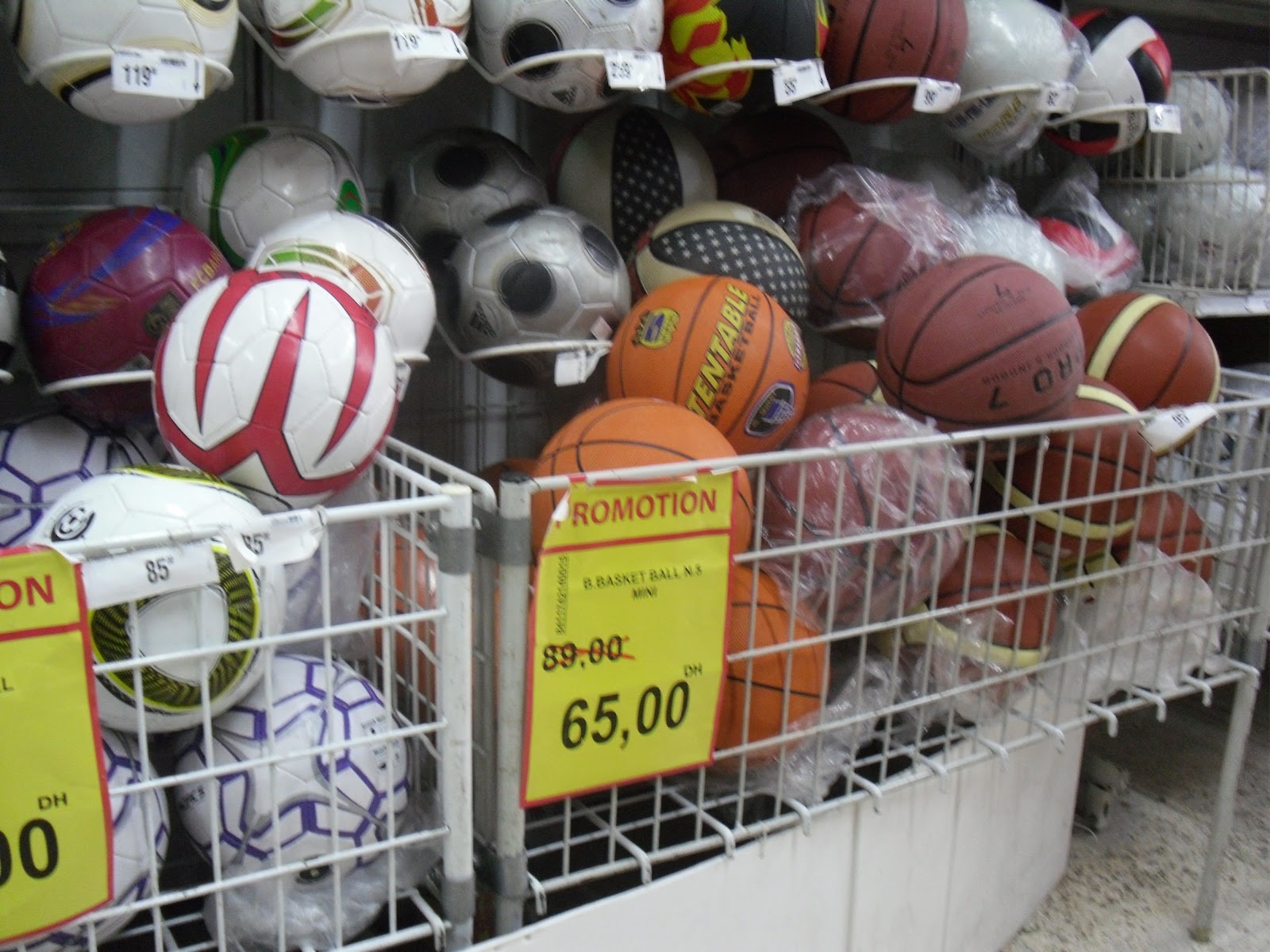
However, I didn't expect the final end of the spectrum: the Super "Marjane" or Moroccan Wal-Mart (no known affiliation!).  Further, I've been pleasantly surprised with the number of established electronic and furniture stores in the neighborhood.  Think mini "Best Buy's," complete with over-the-shoulder sales hawks hovering behind the consumer at a respectable distance, patiently waiting to swoop assist.

But back to the "Marjane."  Mirroring any large American retail and grocery store, Morocco's mega-store is located in larger cities, offering competitive prices and trying to fill the consumer's every need.  Large, neatly-organized, florescently-lit isles lined with kitchen appliances, computers, printers, TVs, groceries, fresh fruits and vegetables, clothing, exercise equipment, toys and power tools.  Despite the presence of my shopping cart-led peers, this is ultimately a materialistic and lonely experience.


Supplemented by a Pizza Hut and numerous service shops, the "Marjane" succeeds in providing enough options to the casual customer to keep him or her there longer than planned.  Using a different tactic, the other end of the shopping dynamic easily accomplishes the same.


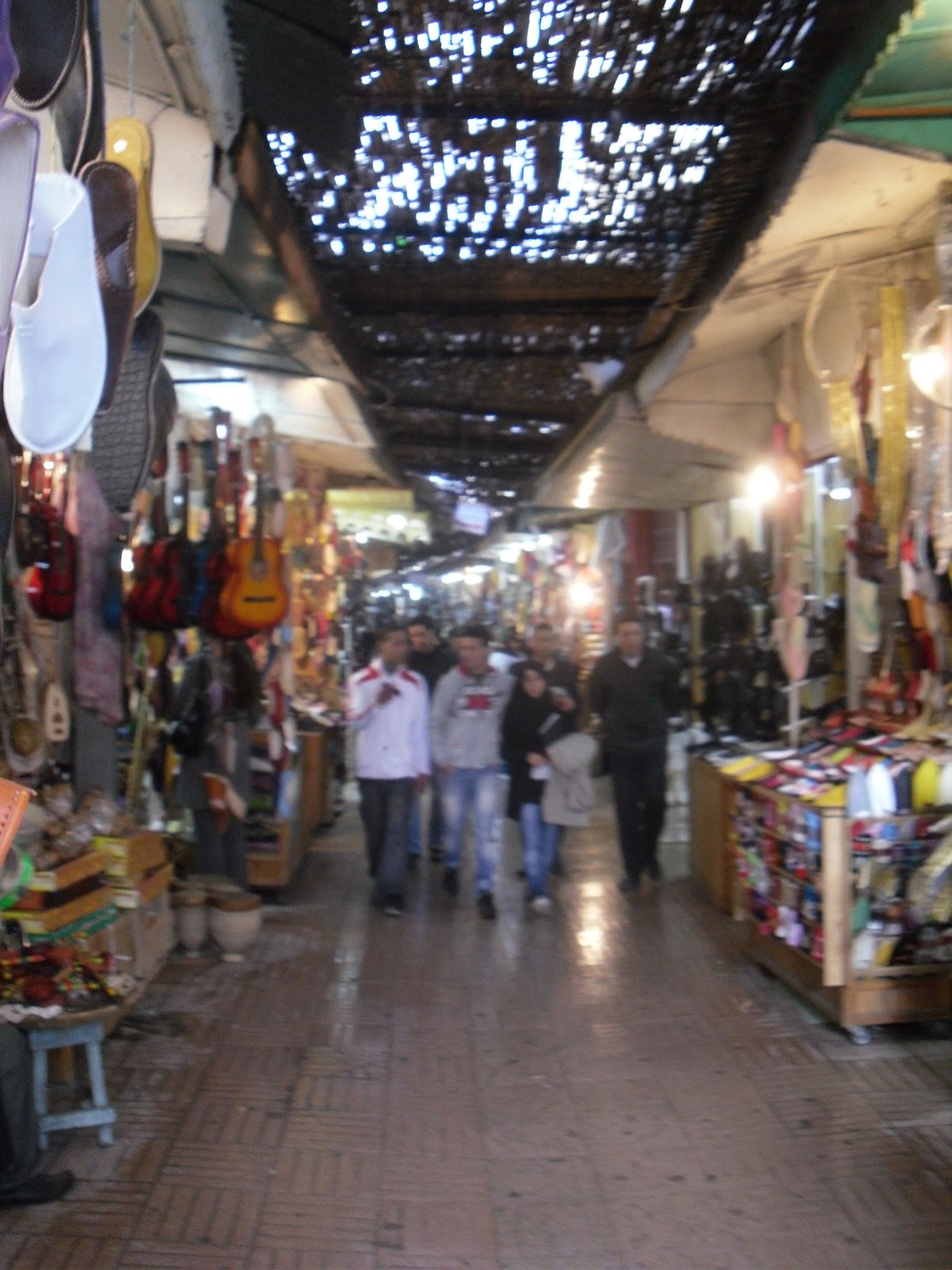
The "souq's" tightly-packed cobblestone alleys offer shoppers an entirely different - and entirely Moroccan - shopping experience that fills the senses and empties the pockets.  Claustrophobic stalls rub each other's shoulders as shop owners entice passers-by for a minute of their time.  They sing tried and tested welcomes, thrust out their best deals in clutched hands extending from jalaba-covered arms; they scurry their children in pursuit of a particularly tempting target with a lucrative buy and pitiful eyes.


Puddle and cardboard-littered lanes replace clean and organized isles.  Smells assault the nostrils: a dung patty repulsing them in one step, skewered beef enticing them the next.  Roasted almonds sweetly tempt to the right.  Biscuit aroma from the back of a Renault.  Between them, huddled forms atop burlap satchels extend skyward palms.  Generosity is cashed here easier than your Visa.


Fresh produce, leather goods and custom fabrics further humanize the experience, requiring the foriegner to enter the old city's gates well-armed with expressions of dialect, an open mind, stong will, compassion and the energy to travel the winding road of bargaining in a second or third language in the professionals' home field.


Even in Rabat's modest souq, I find my "default" setting tested.  Trying to navigate the poorly-marked trails of Arabic and Darija during conversations often leads to more questions than answers.  I don't find my treasure (a power converter) this particular day.  But I still find an experience worth remembering.  And I can't remember saying that after a trip to Wal-Mart.

Thursday, March 3, 2011

That's Using Your Head

Returning from the embassy the proud new owner of more than a couple hundred dollars of honest-to-goodness American groceries, I was pretty excited when I pulled into my apartment building's garage door.

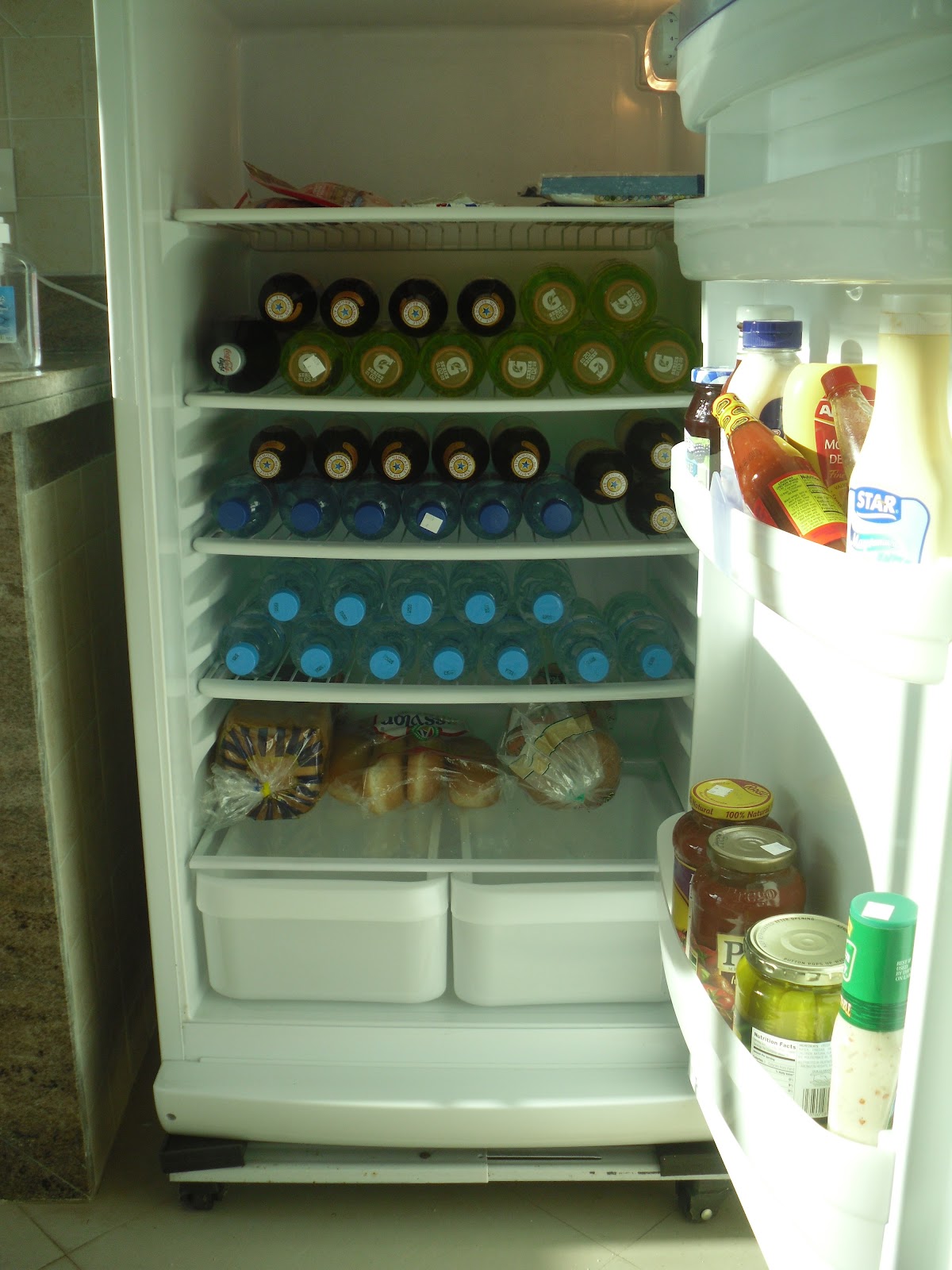
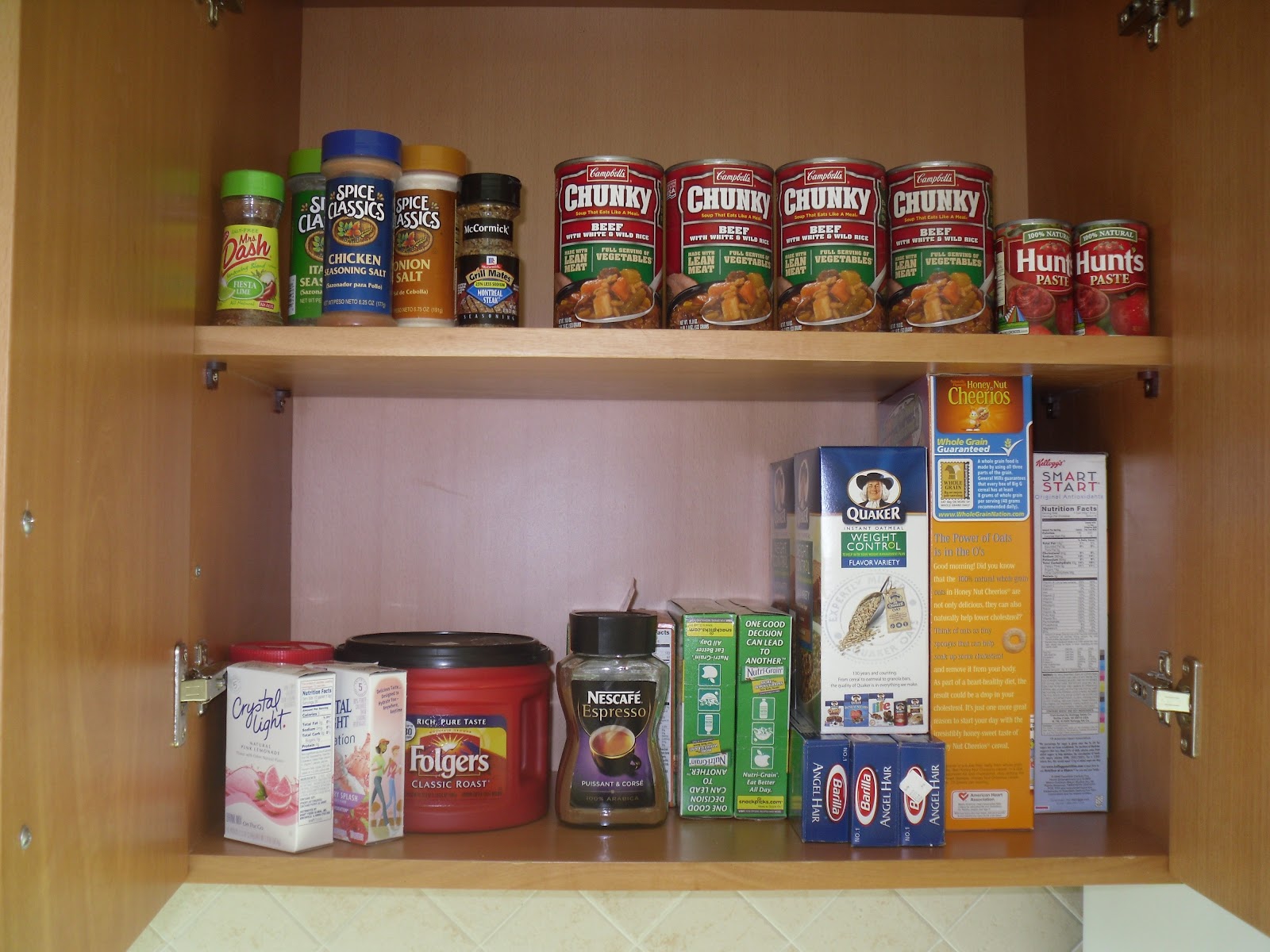
After eating at miscellaneous diners, restaurants and cafes over the past 45 days, I've had enough of relying on others to feed me and decided (finally) to take the task upon myself.  A run to the embassy's commissary was needed as I figured that the Tabasco, mustard, mayonnaise, cheese triangles and Diet Coke previously sitting in my fridge just weren't going to cut it.

I was so excited that I even planned out how to get my six boxes (no bags - paper or plastic - here) of food and alcohol up all the floors from my parking garage to my apartment without hogging the single elevator: unload all of the goods from the truck, take them to the elevator, call the elevator, slide them all inside and reverse the steps upon arrival to my floor.  Easy enough...until the building's bully started picking a fight.
My Nemesis

Known as the Red Dragon in my apartment, he stands a little over 6'6" and lifts over 750 lbs up multiple floors without so much of a whine.  Our red-faced bully likes to pick on unsuspecting tenants daily.  A week ago, he taunted me during 11 consecutive trips by opening and closing his big, fat gaping mouth at my floor multiple times before "deciding" to "play nice" and take me to the ground floor.

Before that, he must have just finished taking someone's lunch money based on the 76 Moroccan Dirhams I "happened to capture" lining his cardboard pockets.

Yup, a 50 MAD bill and 26 in change.  Enough for two lunches.

I won't even dignify mentioning the heartache his work stoppage caused two weeks ago when he was "under the weather" for three days and "bandaged up" with yellow tape.  It's my bold assumption that a certain someone decided to take part in the country's mediocre demonstrations for the day, hoping to pull a Ghaddafi on us...

But today, he wanted a fight.  Being the cunning type of bully who's patient and knows when to strike, the Red Dragon picked today to start things with me this week.  Seeing that I was overwhelmed with bottles of whiskey, boxes of cereal and a smattering of spices busting out of flimsy reusable boxes, he struck as I was herding cats of black pepper, steak rub and chicken seasoning back into their container.

The scene of the assault

Impatiently closing his toothless mouth (not uncommon 'round these parts) several times already to hurry me along, he saw me move my foot from the jam and laid a left hook on my right eyebrow.  Using my head to stop the blow, I was stunned and (actually seeing stars) had to take a moment to gather myself...

No teeth here: most Moroccans don't have medical coverage or see a dentist until their teens

...and then - sticking up for all poor tenants everywhere - laid my best left hook on the beast...


...and then a right...


...And he just stood there.  Motionless.  Dazed.  After years of being able to pick on Moroccans without any repercussions, he didn't know what to do with the frustrated fists of this American.  Then, with both of us wondering what was next, he blinked his central light and made a surprisingly more pleasant "ding."  Keeping his fat mouth open long enough for me to load the rest of my booty, we proceeded up to my apartment in humbled silence.

The Central Light of Submission

Upon our arrival and unloading, the uncomfortable silence remained through peering eyes.  After five long seconds, he dinged once more, closed his gap and retreated down the stairs.  Though we seemed to reach a temporary understanding, I see more problems with this ogre.  Until then, I returned to my apartment a little dented, but able to enjoy a fully-stocked kitchen....


"Why do you wanna fight?" - Adrian, "Cuz I can't sing our dance." - Rocky


 Small but Stocked

Victory Suds...and tomorrow's breakfast

Thank you, R!

Sunday, February 27, 2011

Rabat: My Kind of Town

Rabat isn't a very old Moroccan city, but I'm impressed with it nonetheless.  Located along the Atlantic coast about an hour north of Casablanca, the nation's capital is less than two million strong and mirrors neighboring Salè, an old pirate town, across a large dried-out river valley.

The current governmental situation dates back to 1912 when the French moved their political and economic centers of gravity from Fes and Marrakech to the coastal city's more easily defensible and suppliable location.

Today, Rabat's a quiet mix of governments, historical sites and modern initiatives.  Tied to each of the other large cities by a reliable train system, it also acts as the main hub and affordable means for travel across the country.  For these reasons, it's become one of my favorite places, leaving me without regret for spending my first eight months here.

Being the  country's political center, rows of embassies and consulates line the city's eastern and northern streets and add an international potpouri to Agdal, Hassan and Soussi neighborhoods.  The King's royal palace sits in the city's center, a conveniantly short walk down Avenue Mohammed V to the Parliament and other ministries.

Around Rabat's northern perimeter sit three of the city's most impressive historical monuments, La Oudiya, La Tour Hassan and Chellah.  The Berbers built La Oudiya in the 9th century a short time after the Roman's settled in Chellah.  Rebuilt as a "kasbah" (walled fort) by the Almohads in the 12th century, La Oudiya played a key role in defending the city for centuries.

 La Oudiya's southeastern gate

 Inside La Oudiya, part of a 2-week Art Exhibit

 Inside the main door - I love the architecture!

The view from La Oudiya to the south, including the city's Lighthouse.  No cropping required, Casa.

At about the same time, the reigning sultan, Yacoub al-Mansour, began work on the Hassan Mosque, intending it to be the greatest mosque in the world.  Due to his premature death, the project halted, was never completed and was further destroyed by an earthquake in the 1700's.  Today, only a minaret and unused columns remain in La Tour Hassan, a site also used as a Mausoeum for the two previous kings (and a prince) and the country's Tomb of the Unknown Soldier.

 One of Two Entrances to La Tour Hassan, Guards and Horses real.

 The Minaret, one of three "sisters" with the other two located at Al Khatoubia Mosque in Marrakesh and a mosque in Spain.  In the foreground are the "unused" columns from the sultan's original mosque.

 The Tomb of the Unknown Soldier, which I was surprised to hear existed here.

 The Mausoleum, which - along with the Minaret - is lit up at night and dominates the city's skyline.

 Inside the Mausoleum, Former Kings Mohammed V (front), Hassan II (rear left) and Prince Abdullah.

Part of the Mausoleum's ceiling: One of the most exquisite examples of design and architecture I've seen here.

Begun by the Romans shortly after Christ and later refortified by Muslims in the 14th century, today Chellah remains a shared locale of ruins, mostly frequented by its large stork and cat populations.  Echoing through the ruins, the stork's clacking dominates any stroll through the ruin's ancient hammams, gardens, mosque and medersa.

 Chellah's southern wall

 A small gathering of the site's current "guardians"

 Inside the northern wall, again specked with diligent "guardians"

 The Roman ruins along the western side

The eastern Arab ruins (mosque, medersa and hammam)

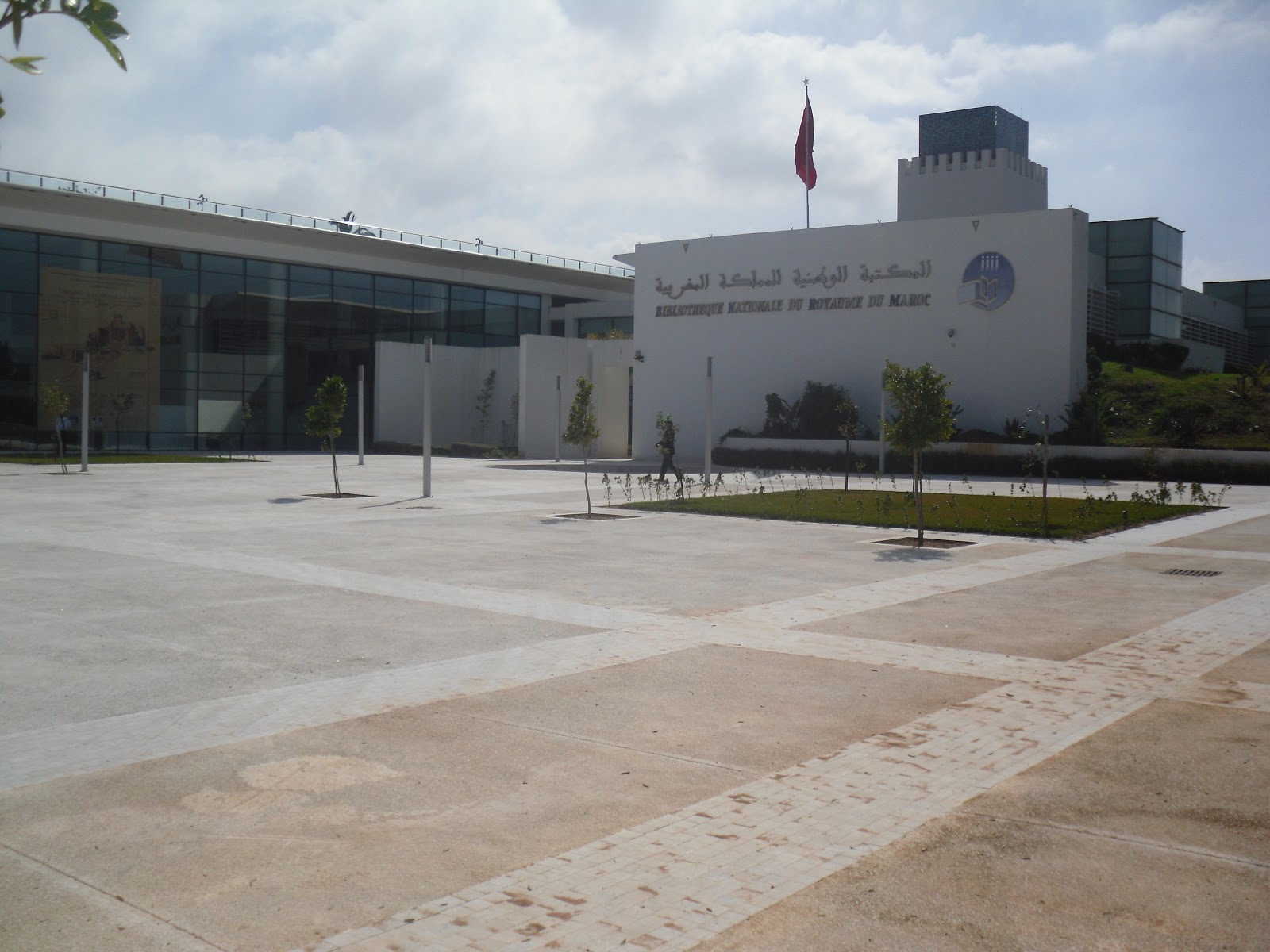
Winding through the city's political and historical landmarks is a new bullet-train that will further tie the city's neighborhood together while hopefully clearing its streets of hundreds of taxis and busses.  Preceding this ambitious project (and nestled next to the King's palace), the ultra-modern national library is the largest of its kind in the country and one of the most functional in Africa, hosting international conferences and seminars within its marble-lined halls.

Modern History: The new Tramway tracks run along the ancient medina wall.

The National Library, the most modern thing I've seen since leaving the States.

As I've walked past and revisited the aforementioned sites, I keep discovering new things about this relatively young Moroccan city.  My host and gateway to the rest of the country continues to impress with its diversity, welcoming citizens and peaceful neighborhoods.  Here's looking at you, Rabat!