Rabat isn't a very old Moroccan city, but I'm impressed with it nonetheless. Located along the Atlantic coast about an hour north of Casablanca, the nation's capital is less than two million strong and mirrors neighboring Salè, an old pirate town, across a large dried-out river valley.
The current governmental situation dates back to 1912 when the French moved their political and economic centers of gravity from Fes and Marrakech to the coastal city's more easily defensible and suppliable location.
Today, Rabat's a quiet mix of governments, historical sites and modern initiatives. Tied to each of the other large cities by a reliable train system, it also acts as the main hub and affordable means for travel across the country. For these reasons, it's become one of my favorite places, leaving me without regret for spending my first eight months here.
Being the country's political center, rows of embassies and consulates line the city's eastern and northern streets and add an international potpouri to Agdal, Hassan and Soussi neighborhoods. The King's royal palace sits in the city's center, a conveniantly short walk down Avenue Mohammed V to the Parliament and other ministries.
Around Rabat's northern perimeter sit three of the city's most impressive historical monuments, La Oudiya, La Tour Hassan and Chellah. The Berbers built La Oudiya in the 9th century a short time after the Roman's settled in Chellah. Rebuilt as a "kasbah" (walled fort) by the Almohads in the 12th century, La Oudiya played a key role in defending the city for centuries.


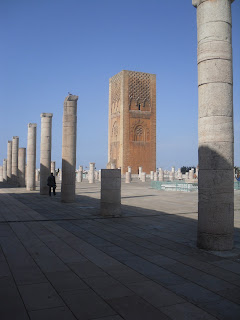
At about the same time, the reigning sultan, Yacoub al-Mansour, began work on the Hassan Mosque, intending it to be the greatest mosque in the world. Due to his premature death, the project halted, was never completed and was further destroyed by an earthquake in the 1700's. Today, only a minaret and unused columns remain in La Tour Hassan, a site also used as a Mausoeum for the two previous kings (and a prince) and the country's Tomb of the Unknown Soldier.



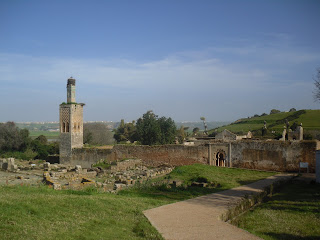
Begun by the Romans shortly after Christ and later refortified by Muslims in the 14th century, today Chellah remains a shared locale of ruins, mostly frequented by its large stork and cat populations. Echoing through the ruins, the stork's clacking dominates any stroll through the ruin's ancient hammams, gardens, mosque and medersa.

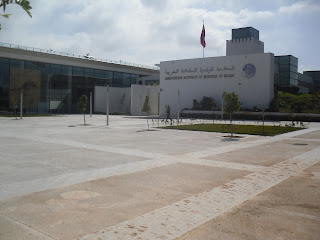
Winding through the city's political and historical landmarks is a new bullet-train that will further tie the city's neighborhood together while hopefully clearing its streets of hundreds of taxis and busses. Preceding this ambitious project (and nestled next to the King's palace), the ultra-modern national library is the largest of its kind in the country and one of the most functional in Africa, hosting international conferences and seminars within its marble-lined halls.

As I've walked past and revisited the aforementioned sites, I keep discovering new things about this relatively young Moroccan city. My host and gateway to the rest of the country continues to impress with its diversity, welcoming citizens and peaceful neighborhoods. Here's looking at you, Rabat!
The current governmental situation dates back to 1912 when the French moved their political and economic centers of gravity from Fes and Marrakech to the coastal city's more easily defensible and suppliable location.
Today, Rabat's a quiet mix of governments, historical sites and modern initiatives. Tied to each of the other large cities by a reliable train system, it also acts as the main hub and affordable means for travel across the country. For these reasons, it's become one of my favorite places, leaving me without regret for spending my first eight months here.
Being the country's political center, rows of embassies and consulates line the city's eastern and northern streets and add an international potpouri to Agdal, Hassan and Soussi neighborhoods. The King's royal palace sits in the city's center, a conveniantly short walk down Avenue Mohammed V to the Parliament and other ministries.
Around Rabat's northern perimeter sit three of the city's most impressive historical monuments, La Oudiya, La Tour Hassan and Chellah. The Berbers built La Oudiya in the 9th century a short time after the Roman's settled in Chellah. Rebuilt as a "kasbah" (walled fort) by the Almohads in the 12th century, La Oudiya played a key role in defending the city for centuries.

La Oudiya's southeastern gate

Inside La Oudiya, part of a 2-week Art Exhibit

Inside the main door - I love the architecture!

The view from La Oudiya to the south, including the city's Lighthouse. No cropping required, Casa.
At about the same time, the reigning sultan, Yacoub al-Mansour, began work on the Hassan Mosque, intending it to be the greatest mosque in the world. Due to his premature death, the project halted, was never completed and was further destroyed by an earthquake in the 1700's. Today, only a minaret and unused columns remain in La Tour Hassan, a site also used as a Mausoeum for the two previous kings (and a prince) and the country's Tomb of the Unknown Soldier.

One of Two Entrances to La Tour Hassan, Guards and Horses real.
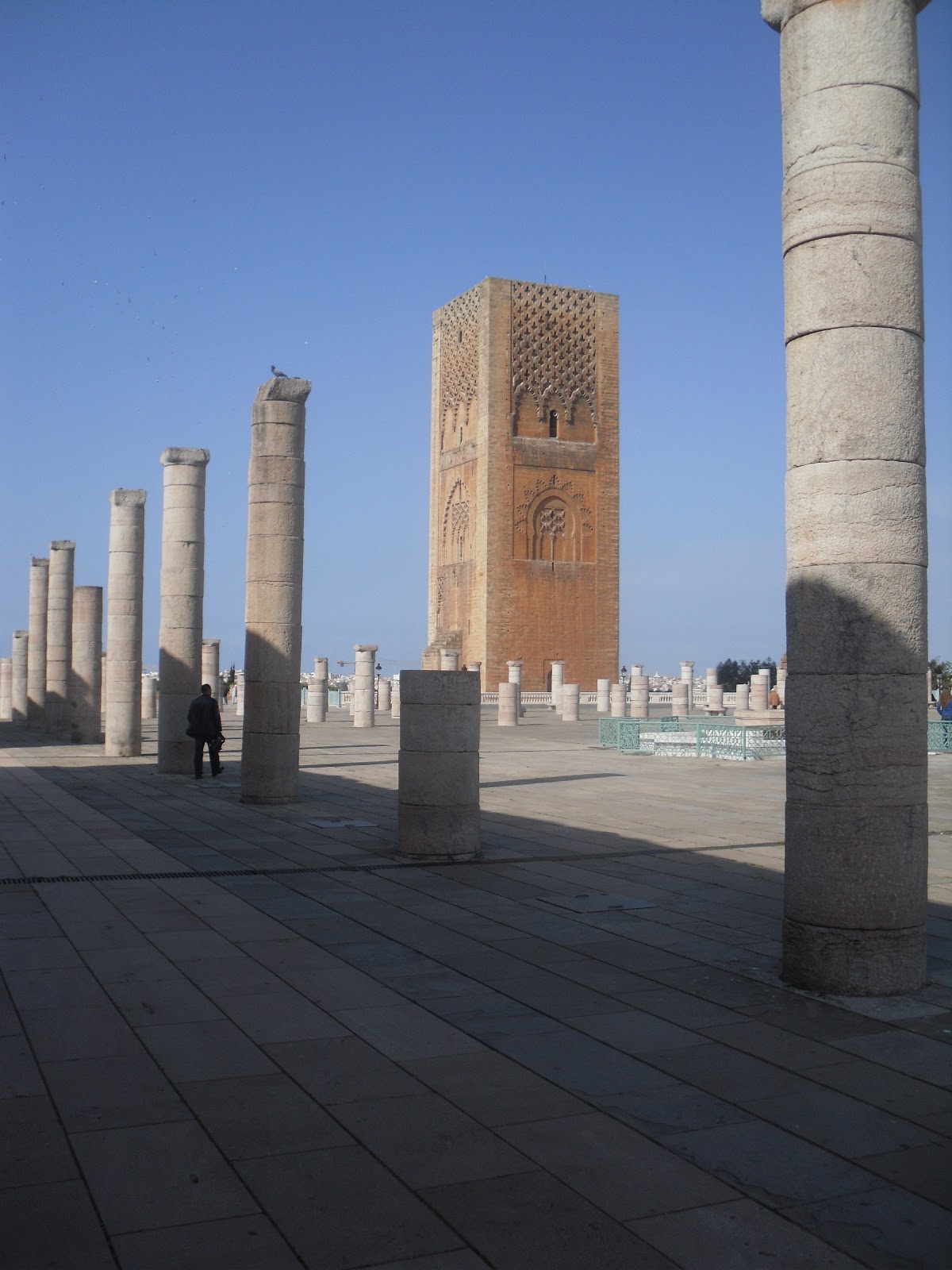
The Minaret, one of three "sisters" with the other two located at Al Khatoubia Mosque in Marrakesh and a mosque in Spain. In the foreground are the "unused" columns from the sultan's original mosque.

The Tomb of the Unknown Soldier, which I was surprised to hear existed here.

The Mausoleum, which - along with the Minaret - is lit up at night and dominates the city's skyline.

Inside the Mausoleum, Former Kings Mohammed V (front), Hassan II (rear left) and Prince Abdullah.

Part of the Mausoleum's ceiling: One of the most exquisite examples of design and architecture I've seen here.
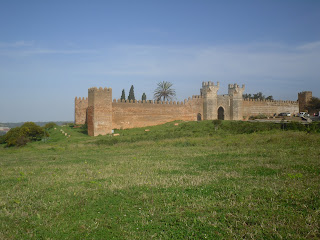
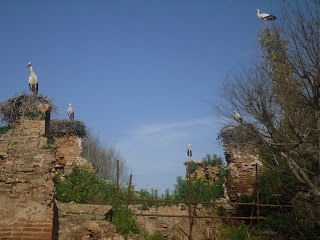
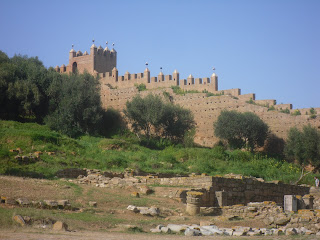
Begun by the Romans shortly after Christ and later refortified by Muslims in the 14th century, today Chellah remains a shared locale of ruins, mostly frequented by its large stork and cat populations. Echoing through the ruins, the stork's clacking dominates any stroll through the ruin's ancient hammams, gardens, mosque and medersa.

Chellah's southern wall
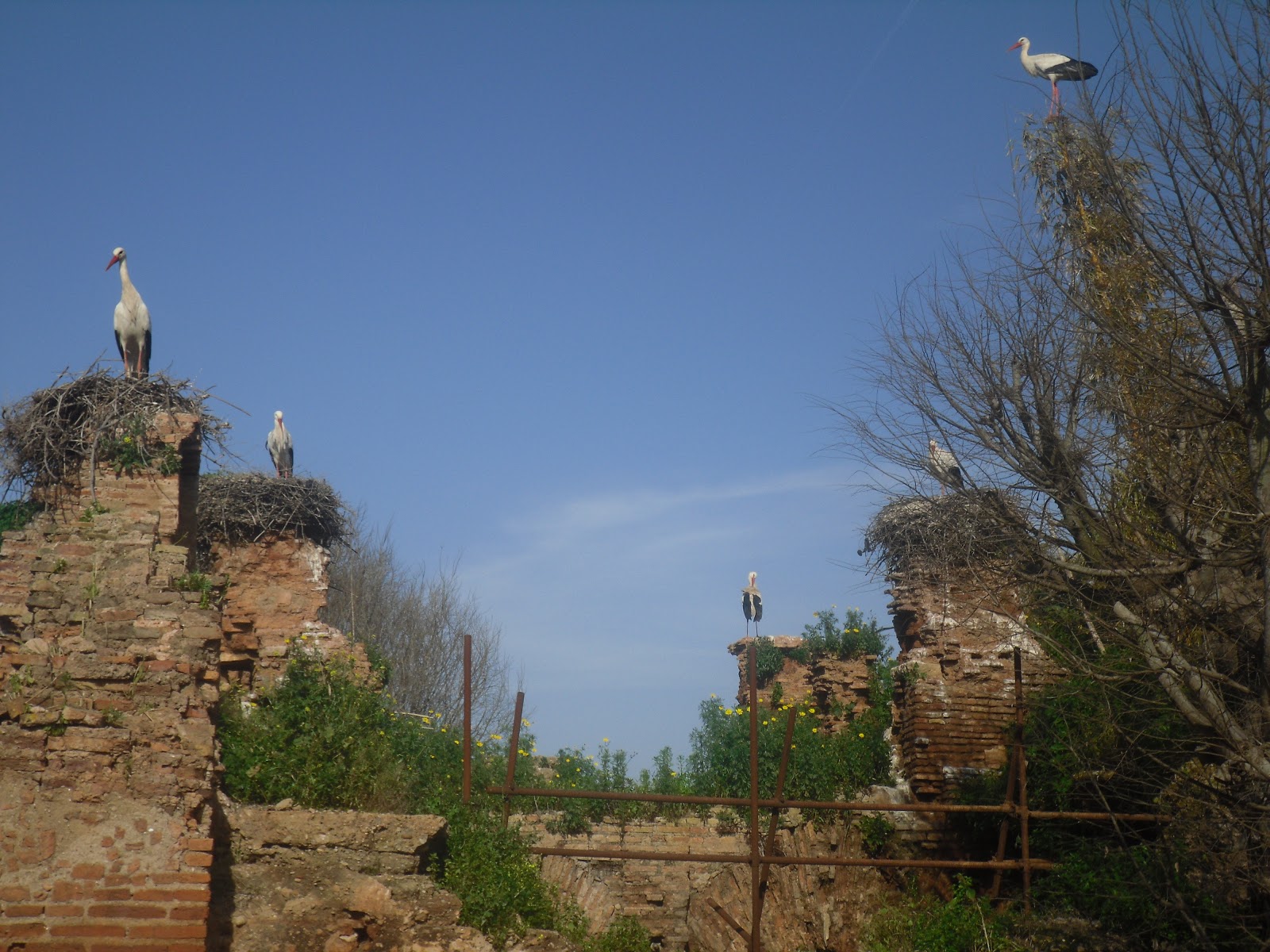
A small gathering of the site's current "guardians"
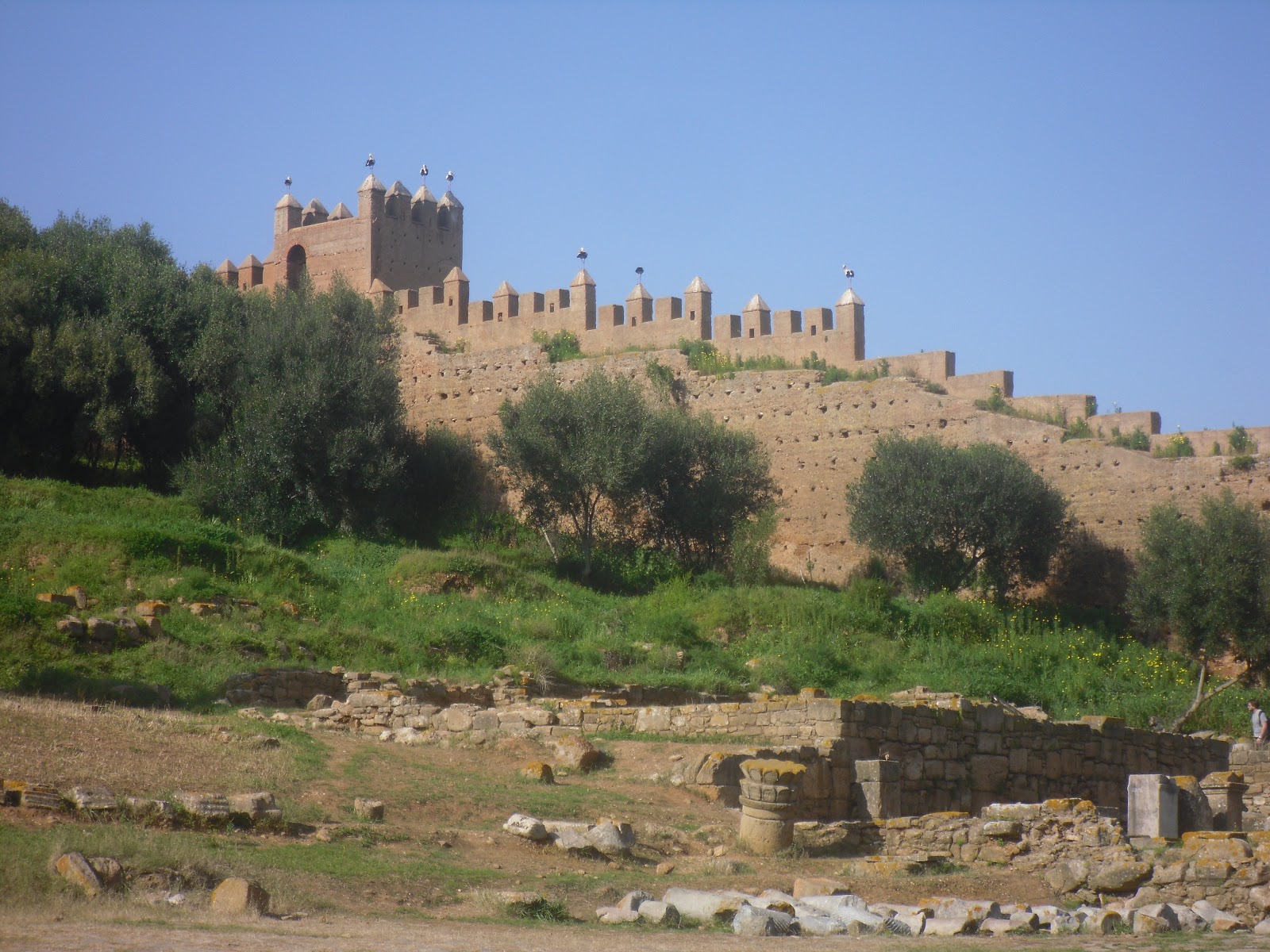
Inside the northern wall, again specked with diligent "guardians"

The Roman ruins along the western side

The eastern Arab ruins (mosque, medersa and hammam)
Winding through the city's political and historical landmarks is a new bullet-train that will further tie the city's neighborhood together while hopefully clearing its streets of hundreds of taxis and busses. Preceding this ambitious project (and nestled next to the King's palace), the ultra-modern national library is the largest of its kind in the country and one of the most functional in Africa, hosting international conferences and seminars within its marble-lined halls.

Modern History: The new Tramway tracks run along the ancient medina wall.
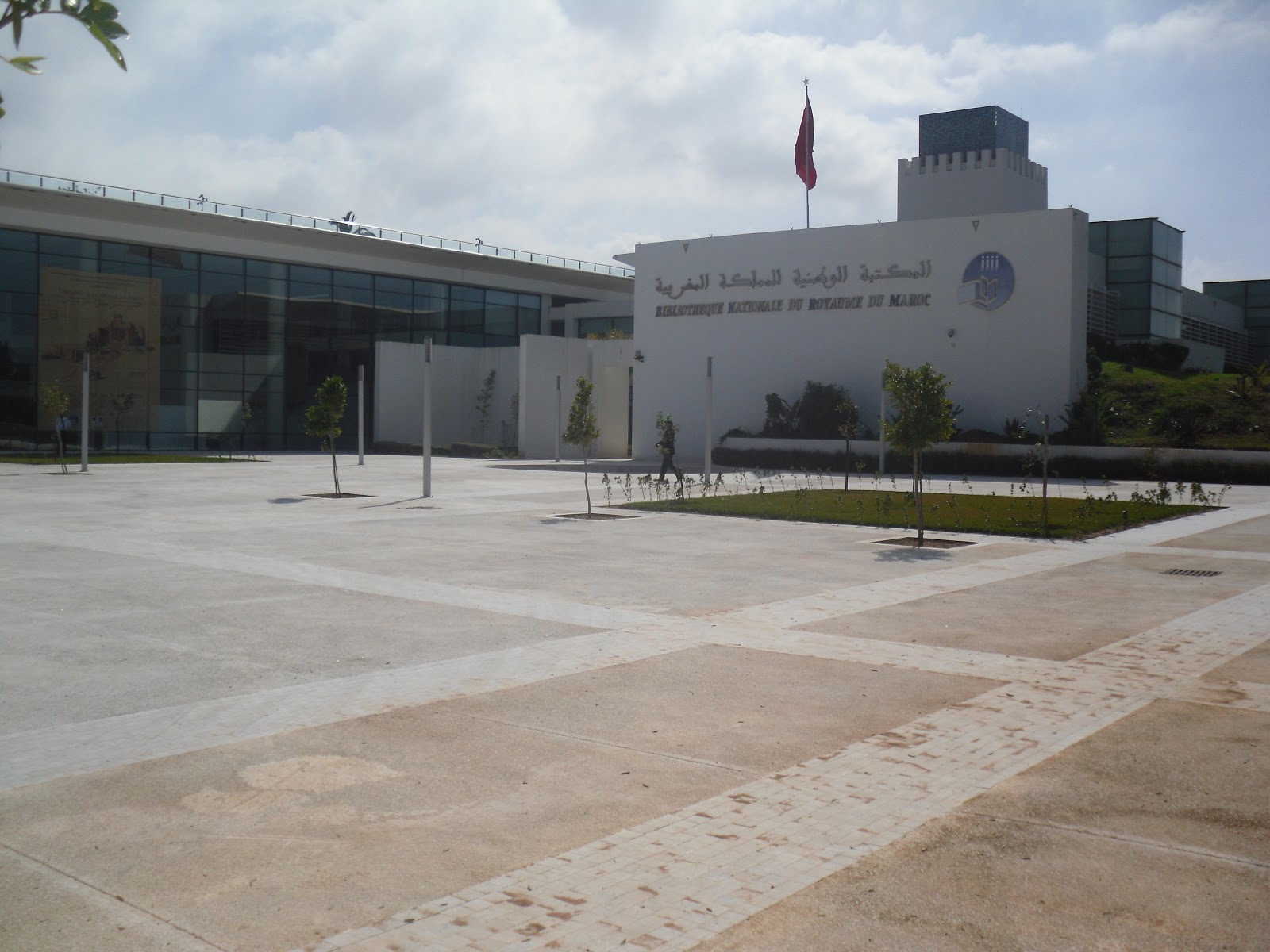
The National Library, the most modern thing I've seen since leaving the States.
As I've walked past and revisited the aforementioned sites, I keep discovering new things about this relatively young Moroccan city. My host and gateway to the rest of the country continues to impress with its diversity, welcoming citizens and peaceful neighborhoods. Here's looking at you, Rabat!


No comments:
Post a Comment