Showing posts with label Deserts. Show all posts

Saturday, May 28, 2011

Erg Chigaga Desert: Unknown and Unexpected (Part 3 of 6)

Known as "The Land of Thirst" and "The Land of Terror," [the desert] is feared and respected by all who pass through it, a great dead zone that might have inspired the old nomad adage, "One does not live in the desert.  One crosses it."  Men of Salt, Michael Benanev.
The desert described in Benanev's personal narrative resides in Mali between fabled Timbuktu and the country's northern salt mines where a one-way trip typically takes a few weeks.  In stark contrast, our desert excursion would only last an evening and part of the morning but, in all fairness, the quote still leaves me asking, "Why go into such a place as part of a vacation?"  Each of us had our reasons, but the one I like most is that it allowed us a little touch of the unknown.

Trying to plan for this unknown, I used a fair amount of both English and Arabic to set up our trip to the Erg Chigaga desert near the tiny border town of M'Hamid.  And, after numerous emails and chats and a meeting with the agency owner, I thought that I had the details whipped: meet at the hotel in M'Hamid at a certain date and time, ride camels for an hour and a half to the bivouac site, have dinner and a tent to sleep in and ride an RV out the next morning.

Further, being that it's May and starting to get "Africa hot" even in Rabat, I thought I had a good idea of what the weather and severity of the trip would look like.  From the local forecast, it'd be sunny and hot and from several guidebooks and reviews, the trip wouldn't be as severe as Merzouga due to some smaller dunes and considerable distance to them from our starting point.  In between the two, the sand should be minimal and the ground a hardened type of flat skreet rock.

Reality didn't quite match our expectations, as my mother later recalled:
"Expectations: Short camel ride into a campsite complete with bath, bed and meal.  Ride out in comfort in a 4 wheeler-then, move on!  Reality: 2 out of 5 ain't bad."
Additionally, the stakes were raised at the last minute as my grandmother and Al (originally slated to take an RV out and back) opted to give the ninety minute camel ride a shot after the agency's owner assured us that the ride would be doable for a couple of eighty-somethings because we could stop as necessary and adjust (which they proved accurate, and then some!).

What we experienced, however, was a little different.  An hour and a half turned into two hours, the RV back transformed into the same camels that we rode out and the sun and heat morphed into sand-laced wind in the evening and a non-stop, cold and driving rain the next morning.

Through it all though, one expectation was surely met: we got a trip never to forget!

It started well enough.  Our two young guides and six camels were ready and awaiting us when we arrived at the hotel.  After a little tutorial on how to mount and ride our dromedaries, everyone got up without issue and we began our trip.

My sister was the first one up and the last one off.

Grandma did great, despite the duration of the trip and various weather.

Mom and Al ready to go.

Thankfully, the skies were full of streaming sheets of clouds that shut out most of the late afternoon heat.  But even this reprieve didn't come free, as it was accompanied by a gusting wind that gave us plenty of finely-granulated sand to chew on and filled most of our nooks and crannies.  Yet under the mixed weather, our focus quickly shifted to one of our "ships of the desert."

A good beginning...

...quickly turned into sand scurrying across tiny dunes to greet its newest visitors.

The dromedary in question was mounted below 85 year-old Al and was bothered by a back injury that sharply brought him to the ground no less than four times.  Watching the first couple of times, I couldn't believe that Al stayed on during the swift descents.  Hard enough to stay on a camel when it goes down in a controlled manner, it was a testament to the man's strength that he did it without warning.  Way to go, Al!

Possible reasons why the camel went down: a rough saddle sore on his back, a splinter or thorn stuck between the wooden saddle and his back, he wanted to test Al's resolve!

We all arrived at the bivouac site a little sore between the thighs and ready for a little trip into the dunes, some dinner and rest.  The site was modest, with tents for two or four people and a shared communal bathroom.  A late dinner of beef tajine filled our empty bellies while a one-cat welcoming party made the animal lovers feel at home.

Part of our destination.

Megan atop the highest dune.

The Erg Chigaga

One of our guides making his way to the supply tent.

Our welcoming party.

After dinner, sleep didn't come as easy as any of us hoped, as steady breezes sprinkled more sand through canvas tent flaps atop weary masses who were trying to drift as easily into dreams on slat-wood cots.  Before my dad knew it, I was waking him for a sunrise that never happened shortly after he finally got to sleep.

Mom's Most Interesting Moment: "How we ended up riding those camels all the way back in the wind and rain the next morning when it was communicated that we would be back at our starting point in the back seat of a jeep!"

What Mom Enjoyed Most: "The camels.  Being an animal nut-case, I found these guys (and they were all males) all pretty neat. Considering how they were created to live in this environment was inevitable.  We had 2 hours to study all of their parts, their moves, their communicating, their moods, and feel how sloppy they are to ride.  Translated: no one left this trip without feeling some degree of pain from those camels..."

After a gritty trip out and a restless night, we were all ready for the trip back to the hotel and our comparatively luxurious van.  The return trip, however, gave us one more reason to appreciate that we came to the desert for a once-in-a-lifetime experience and didn't have to survive there like some of the Bedouins whose paths we crossed.

A few minutes removed from the campsite, the sky opened with a drizzling rain that escalated and lightened over the next two hours but never quit.  Wet dromedaries smell like wet dogs and are about as stable as drunk men walking on stilts under hundred pound backpacks.  120 minutes haven't passed that slowly since the last time I tried to sit through an Arabic class.

But when the clock stopped on our trip, smiles replaced frowns and soon enough wet clothes were traded for fresh, dry ones.  As we piled back into our van, moans of relief echoed while stories of our little hardship were shared with laughs.  It was a good trip and wouldn't be forgotten as we faced our next leg: Nine hours to Agadir.


"Hail of Bullets:"
  • Mom: Our 10:00 (?) pm "pot roast-style" dinner was great, served by our jovial guides, complete with tea, water, breads, and ice cold honeydew melon slices. 
  • Mom's Main Attraction: "The wonderful feline that entertained Megan, Al and I whilst dinner was being prepared (he was a talkative fellow)."
  • Mom's thoughts on the "sleeping arrangements:" The sub-adequate restroom (at time to retire), its kerosene light had little life left to help me brush my sandy-gritty teeth and finally, the long awaited rest.  We were assured by Abadeen (our little guide man/cook/server/host) that he and Habeeb (his co-pilot) had prepared a "very comfortable bed" for us after they had cleaned up the dinner table (not quite).
  • What mom enjoyed least: (a) Trying to sleep in those "comfortable beds".  (b) The sand storm that kicked in midway through the night.  (c) The result of sand storm = sand in my tent, bed, pj's, hair.....wind threatening to relocate entire tent.....(d) Gramma wandering out of tent to find the bathroom in the middle of sand/wind storm.


"Planning Factor of the Day:"

Despite having the details of my desert arrangement written out and signed by both parties, this apparently didn't mean too much due to the fact that three different entities (the agency owner, his "representative" at the hotel, and the actual guides who took us out to the desert and back) were part of the trip but don't apparently work directly for one another.  

Either by design or accident, communication between the three and with me was labored and ultimately resulted in a different product than originally arranged.  Though it wasn't insurmountable, it didn't come without some adverse effects.  Regardless, I still feel like we got what we wanted, and the only thing still chafed is my inner thighs.  

One of the less convenient truths about the matter, unfortunately, is that if you put yourself in a position of minimal control it may end up being what you get.  In a foreign environment such as M'Hamid, far removed from Rabat and hours from the agency owner, control is significantly limited.  You may be put in a position to either push through it or default.  We pushed through it.

Monday, March 7, 2011

Remembering a Little Perspective (Part 3 of 3)

The final leg of our four-day journey took two days of continual driving from Merzouga in the country's southeast province to central Marrakesh.  Covering about six hours of road-work on the third day and another five on the final day, there was more than enough scenes to fill the eyes.  Gorges, valleys and mountain passes provided nature; the villages of Ourzazate and Aitbenhaddou added culture.  

Days 3 & 4: Merzouga to Marrakesh
(see route map here)

The Gate to the Desert in Rissani: I couldn't tell if by going through this gate I was entering or leaving the desert.  Regardless, this ancient city just north of the Merzouga dunes was used for centuries as a Saharan trade hub and military base able to move 20,000-camel caravans to Mali to swap salt for gold.

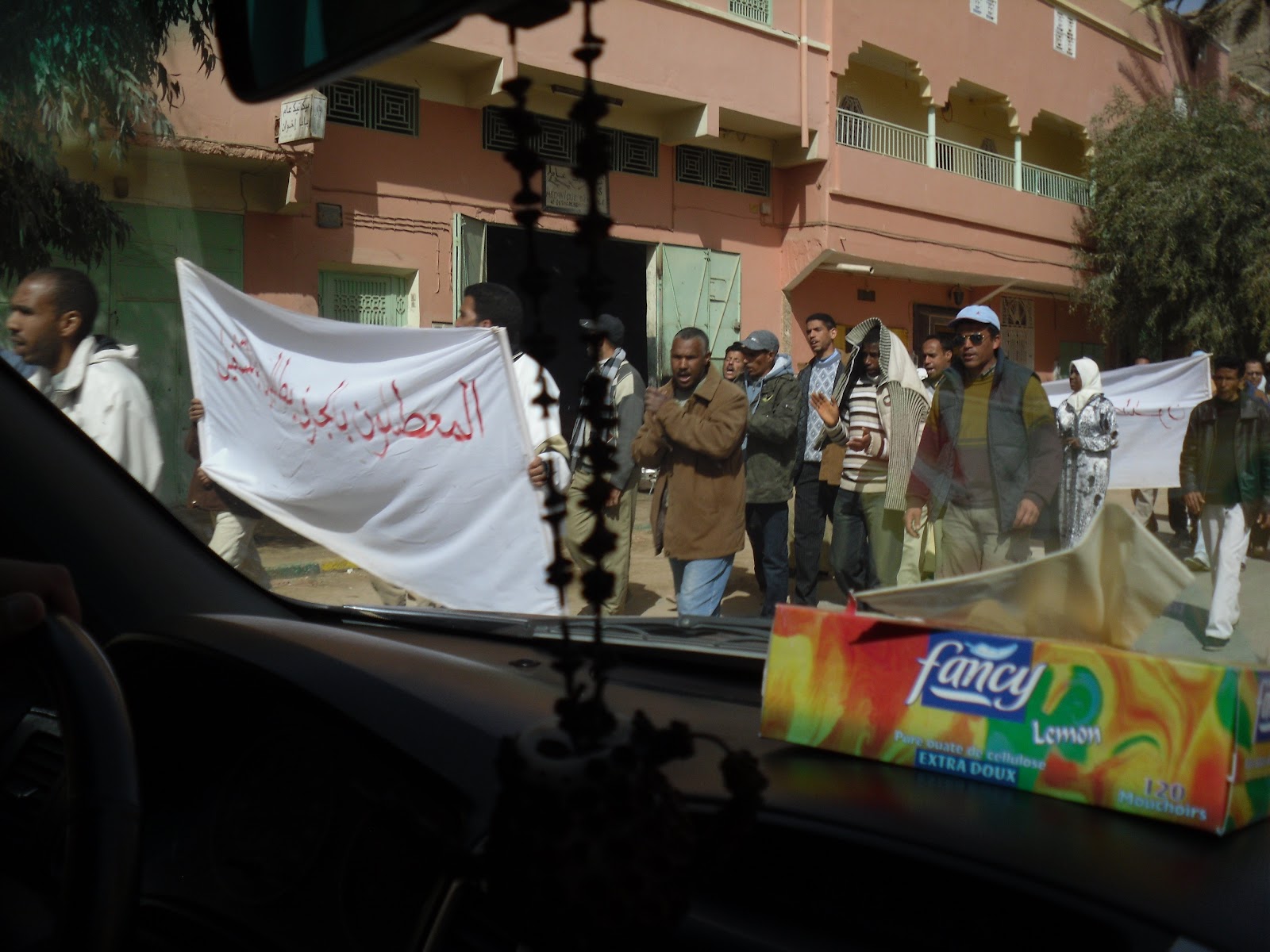
Jorf Village: After about two hours on the road, we pass our second demonstration of the trip.  The first was in the Middle Atlas on the first day.  A little smaller today, the issue remained the same: unemployment.

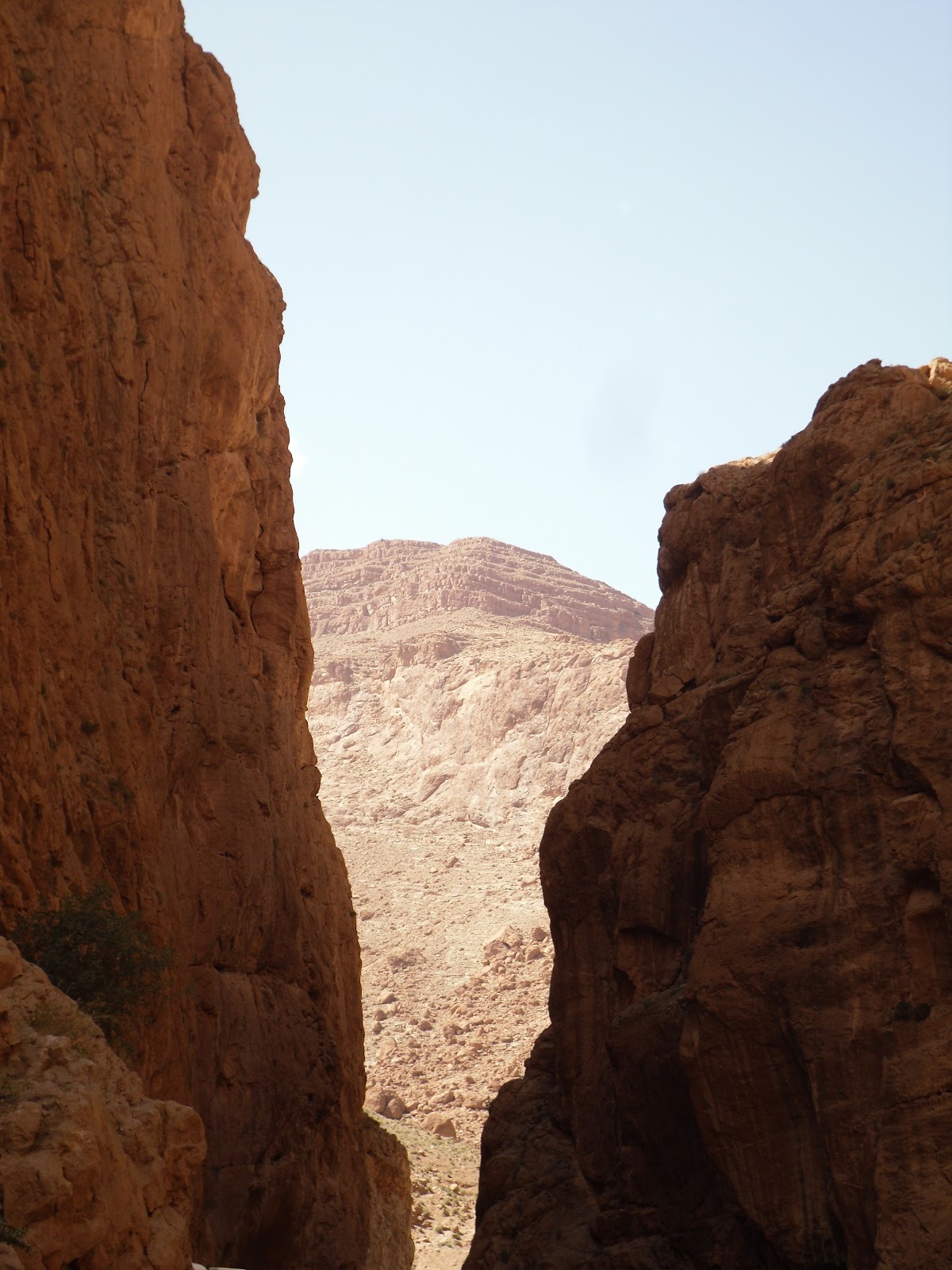
Tinerhir: Settled to the south of touristic Tordra Gorge, this picturesque village was bustling with kids going to / from school and construction workers preparing for the King's visit in the next couple of days.  The white paint around the bottom of the trees is an attempt at "area beautification."

Tinerhir: The lush valley fed by the Gorge.

Todra Gorge: Windy, chilly and full of French, German and Japanese tourists


The Dades Valley: The village of Bouman du Dades overlooks one of the more lush valleys south of the High Atlas.

The Rose Valley: Named for the roses that are cultivated every May in the Rose Festival, this valley lies to the west of the Dades, is less fertile but produces more than its share of the country's rose and almond totals.

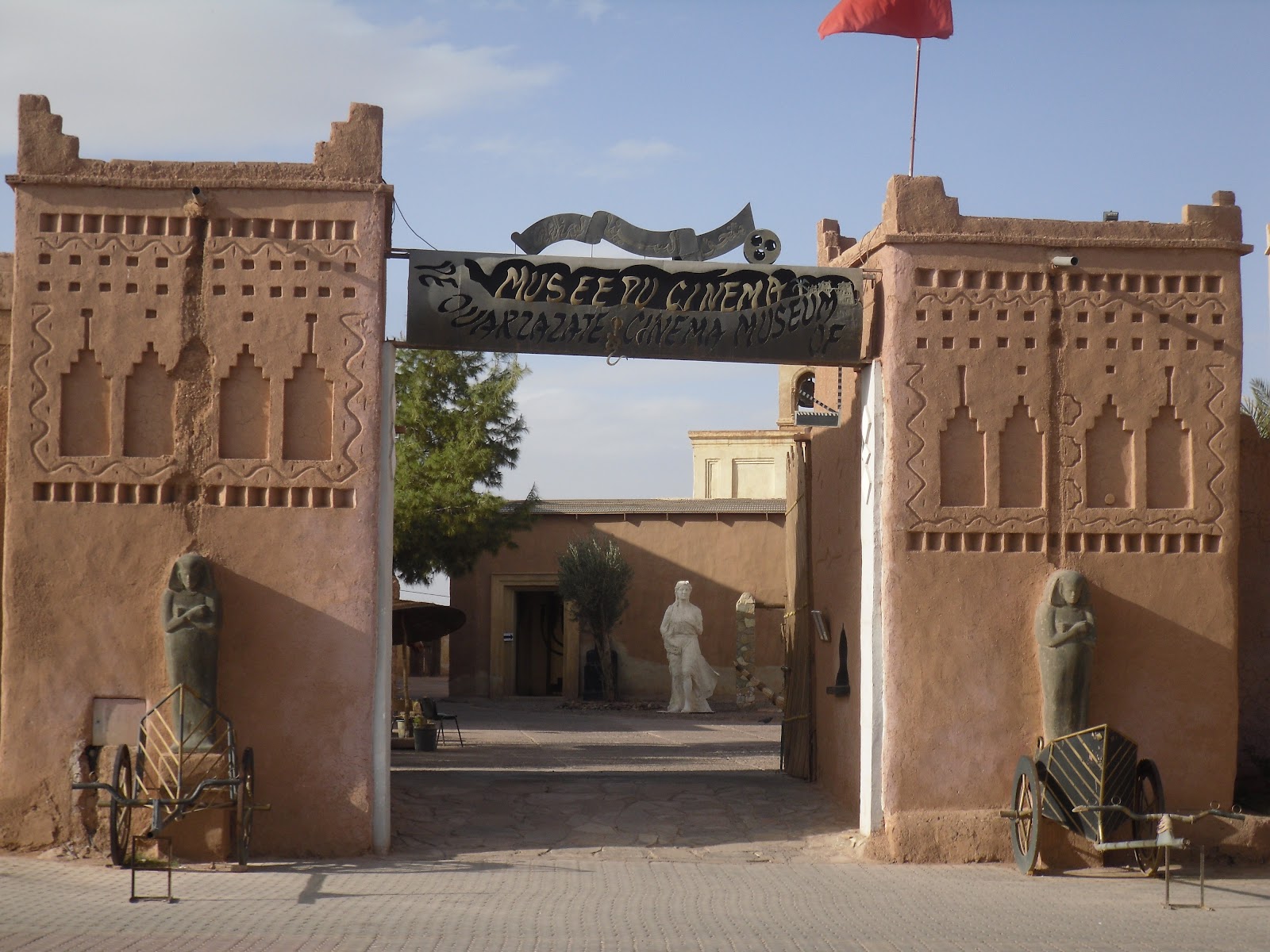
Ourzazate (war-za-zat): The country's ultra-modern film capital houses a cinema university, museum, two production companies and a kasbah used as a backdrop for Star Wars

Taourirt Kasbah: Used in Star Wars as well as other lesser-known Arabic and American Films.  

Ourzazate: Ramparts and Street Lights

Ouarzazate: Atlas (above) and Cla Cinema Productions

Ait Benhaddou: Another UNESCO World Heritage site, this 11th century kasbah has been renovated and re-used in the past century as a popular movie (and photo) backdrop.  Gladiator and Alexander (and Bessey) most recently...

The views to the north and south of the kasbah in Ait Benhaddou.  Again, a strategic location for Sultans centuries ago.

Tizi n' Tichka: Weaving through the High Atlas Mountains between Marrakesh and Ourzazate, this is the highest pass in the country at nearly 2500m (~7500').  Scenic doesn't describe the effects that the different layers of rock, vegetation and structures give viewers.  

One of my favorites.

This is the second shot that reminded me of Afghanistan in the pass, but the entire thing could play a suitable double for the country's northeastern provinces.

My second-favorite shot, stretching some 40 km to the furthest peak.

After 4 days, Zayed and I parted ways at the Marrakesh Train Station.  I'd recommend him and his company to anyone!

After four long days, I saw a lot and came away meeting most of my goals.  Wanting to see the majority of the population, they obliged my eyes with a couple demonstrations, streets lined with endless shops and always an opportunity to purchase something at every stop.

Unemployment (in our sense of the word) is bad in most of the villages, and it's easy to see it along their roads (even at highway speeds).  Both demonstrations demanded better employment opportunities and most people I ran into overtly wanted something from me.  It was refreshing, however, to see that the unemployed had the freedom to demonstrate.

Most of them spoke in Berber, lived in villages named after Berbers and flew Berber flags.  A majority in this country, their language doesn't enjoy "official" status.  Before today, I didn't see how much of an issue that is.

Saw some regional and national agricultural and resource centers for apples, dates, watermelons, honey, Kohl, fossils, roses and tourism.  The latter arguably being the most important of all of them in economical terms.

Probably most importantly, I was reminded that plans differ from execution and things aren't always as simple as they appear.  Looking at the map before my trip, I saw green fade to brown to yellow and back to green over lines and around dots.  Four days to see all of them: easy.  Not so, of course.  The lines and dots have meaning and complicate or sweeten the journey.

None of this was more prevalent than when we arrived to the dunes of Merzouga.  My first impression was, "This is it?"  Measuring ten by fifteen kilometers, we drove around them and I could visualize getting in them and easily following the sun to their other side on foot.  These were not the endless Saharan dunes that filled my head since childhood.

Getting inside of them though showed how difficult it was to actually make that "small" trip.  The temperature dropped and the sand gave way at every step, expanding each dune in both length and height.  At the risk of exaggeration, meters became miles.  Not helping was the wooden and burlap stirrup-less saddle cutting into my inner thighs.

Coming out of the desert the next day on one of the longest one-hour trips I've taken in recent memory provided a little more perspective and - again - my mind drifted to jobs past.  In this case, however, I couldn't help but wonder if our policy makers thought the same things I did the day before as they looked at their maps of Afghanistan and Iraq in 2002 and 2003.

Perhaps unlike Bush's Vulcans, I'd happily take my journey again though.  

Merzouga's Dunes (Part 2 of 3)

As mentioned in yesterday's post, I'm in the middle of a four-day desert trip to take in more of the country than just the big cities.  Yesterday, my guide and I drove from Fes to Merzouga in about seven hours.  Today, we began our travels at 10:00 AM by driving around the dunes.  My day ended about ten hours later in a cold tent in the middle of the desert.  Here's what happened in between.

Day 2: Merzouga
(click here for a map)

 The Nomad Palace Hotel: The walls were made of a straw / mortar mix that help cool room temps in the summer and retain heat in the winter.  For those of us with allergies, it also gives us something to sneeze about...

 From yesterday, the Dromedary Camel has one hump and is the only camel in Morocco.  These guys get a 2-foot rope tied around a bent knee at night (making them 3-legged)so they don't stray too far.

 The Merzouga Desert is known in Morocco for its reddish tint, which differs from the golden southern desert nearer to the Western Sahara.  The reason may be because a hard, compact black desert surrounds the dunes, keeping down dust and other things that impact their natural color.

The first evening's sunset

 The second morning began in the village of Khamlia.  Thought to originate in Sudan and migrate to Morocco due to the slave trade, the Ganoui tribe now makes music and sells CDs to unsuspecting tourists after playing four songs in their compound.  A snippet follows...

 The majority of Morocco's population is Berber.  Here's a look at their rarely-used alphabet.  "Z," represented by the symbol that looks like a guy waving his hands in the air, is on the berber flag, which is blue, yellow and green.

 In the foreground, some of that black surface that I mentioned earlier.

Working Hard 

 Part of the ruins surrounding the 15km x 10km dunes.

 Quartz and Kohl are common in this area.  This is the type of Kohl that women use to line their eyes.  In past generations, most of the caravans would load up on Kohl before making the trip to Timbuktu in Mali some 52 days away.  Today, two 17-year olds man the machinery.

 A nomad dwelling near the dunes; over twenty different camps can be found in the area.  Hospitable enough to give us tea, I felt bad for imposing as we didn't even talk to them during our trip.  I was assured that this was normal, but still felt bad.  They stay in one place for about a year or two and then move atop dromedary and livestock.

  In the clouds sits a kasbah-turned-hotel in front of the dunes.

Merzouga Rush Hour Traffic

 Pretty plain...
...but the drive wasn't.  Which music clip on this post do you prefer?

Mid-afternoon over the town. 

 Getting ready with my guide, Mustafa, and "safeena assahara" (ship of the sea), Ali Baba.  And that turban's a light shade of blue for a reason!

 Requisite camel ride shadow portrait.

 Southern dunes before sunset.

 Western dunes.  The trip into the desert lasted about an hour and fifteen minutes.  It felt a little longer.

 Mustafa, leading us into the dunes.  Seeing him hold the lasso to my dromedary, being the leader and guide of my western behind, I felt pretty wimpy.

 Green, brown, blue and white.

One of "Mustafa's Marauders," not to be confused with one of Merrill's old boys.

 Toward Sunset.

 Sunset...and 5 degrees of Celcius.

 Our bivouac for the evening.  After nine hours inside I gained a hacking cough and the utmost respect for the nomads of old (as well as those who are still living in these types of conditions in other Islamic countries).  Little reminders...

 Gearing up for our departure the third morning...

 Sunrise; not as enjoyable as I pictured it.

 "Ugh, my inner thighs."  There's a reason cowboys are bow-legged.

The three amigos after our round-trip.  It was too early in the morning for Ali Baba.

Overall, the actual trip to the desert was shorter than I thought it would be.  However, it was quite sufficient.  Taking about an hour each way by Dromedary-back, we covered maybe a mile or mile and a half.  The tent activity was light: dinner and sleeping, waiting for the sunrise.  The night was cold and, despite being wrapped in 5 wool blankets, I came down with a bug the next day.  Good trip; just forgot how cold it actually gets in the desert this time of year!

The trip concludes tomorrow with another ten hours driving south of - and over - the High Atlas to Marrakech.