Showing posts with label Middle Atlas. Show all posts

Monday, May 30, 2011

The Middle Atlas: Volubulis, Fes and Ifrane (Part 5 of 6)

The short trip to Fes was our second - and least time consuming - drive.  Much needed after our five-day southern affair, the smooth, fast highway from Rabat to Fes was as much a welcome change of pace as it was a change of sites.  Roman ruins, tanneries, authentic arms museums and my future university dominated the visit and speckle the following slideshow...
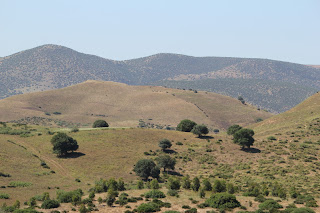
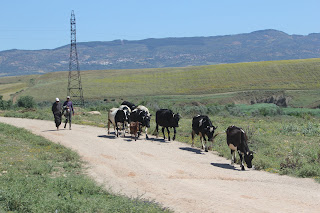
The highway rolled into the Middle Atlas' foothills, our third chain in as many days.

Farming Equipment was replaced by less-intrusive fair along the roads.

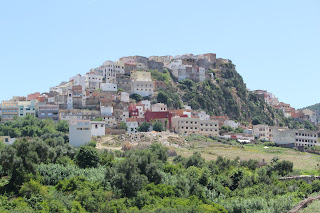
Moulay Idriss, overlooking the nearby Roman Ruins.

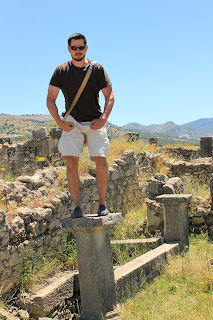
Volubulis: Roman Ruins NW of Fes
(Click here for more on Volubulis and Moulay Idriss)

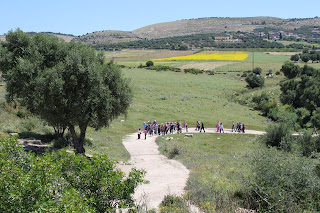
The path up to Volubilis.

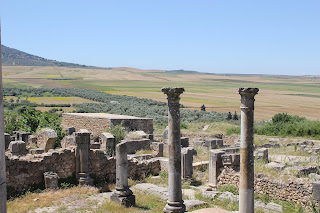
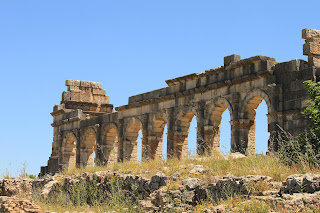
Part of the Basilica.

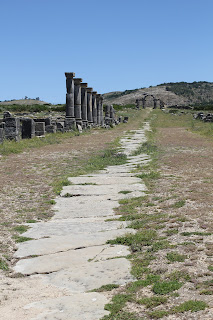
The remaining path up to the Tangier Gate.

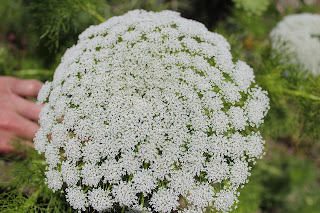
Not to outshine the asparagus-like cactus, these flowers covered the grounds.

The public square and market area.

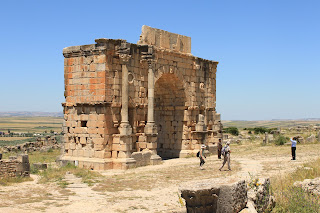
The city's old main arch. 

In the House of Hercules, a mural catalogues his 12 Feets of Strength.

One of the more preserved statues, also in the House of Hercules!

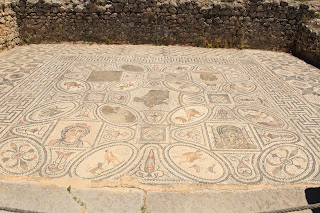
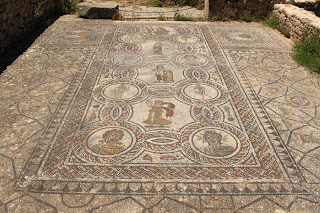
The Four Seasons Mosaic.

Fes: Morocco's Cultural and Religious Center
(Click here and here and here for more on Fes)

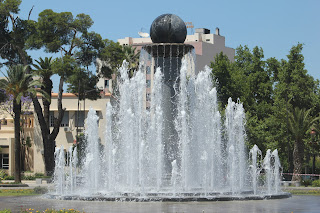
One of Fes' Many Fountains.

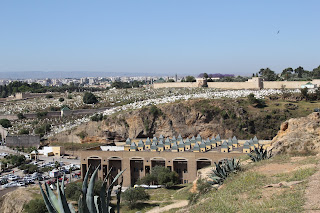
Part of the Old Medina and Cemetery.

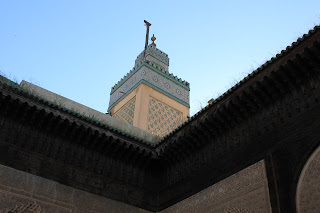
The Medrasa Bou Inania, with its Minaret.

The Water Clock, out of commission since the 1500's.

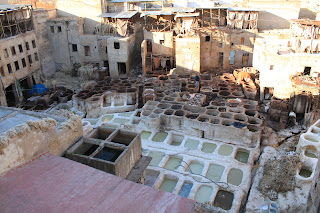
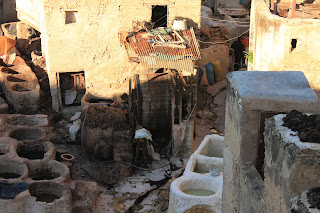
The Small Tanneries.

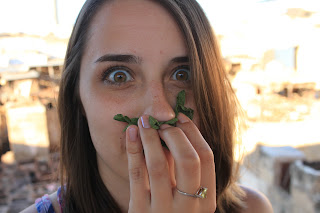
If you can't take the smell, have some wintergreen "nana."

Most of the leather of the day was from goats.

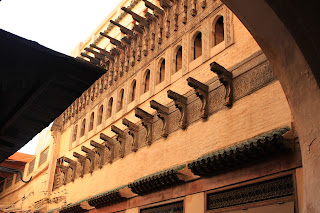
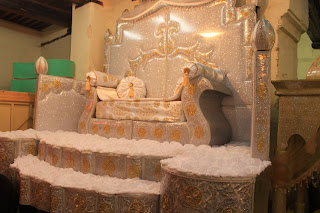
The Wood-Workers' Alley was a new site; settled next to the big mosque, these pieces are produced for rental during weddings.

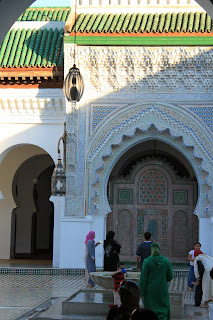
Inside the Oldest University in the World, the 9th Century Qorayine Mosque is now the Country's second-largest place of worship behind the Hassan II Mosque in Casablanca.

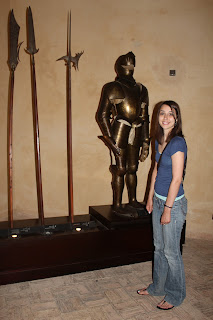
Megan with some 15th century knight-less armor.

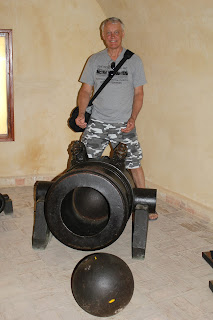
Dad providing "scale" upon mother's request at the Arms Museum.

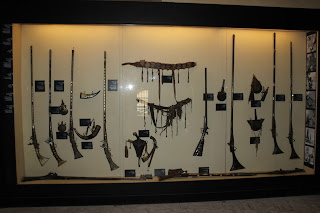
Part of the refurbished display in the Moroccan section of the Arms Museum.

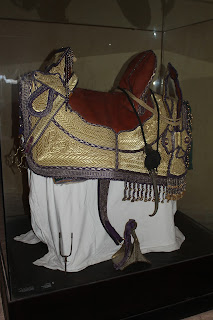
A saddle that any of us wished was mounted atop our camels a few days prior.

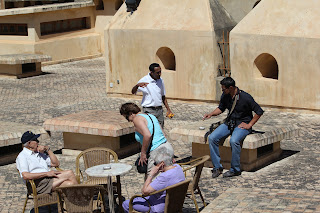
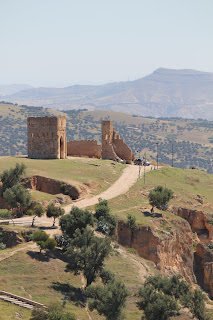
Relaxing atop the Borj Nord and Arms Museum, taking in the view of Fes' Old Medina.

Next to the Museum, the Merined Tombs host their own wildlife...

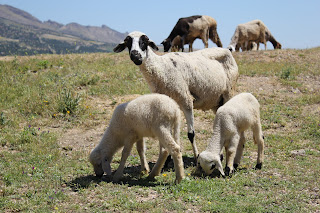
...More Baby Sheep.

Ifrane: The Country's Most Modern University Sits an Hour South of Fes

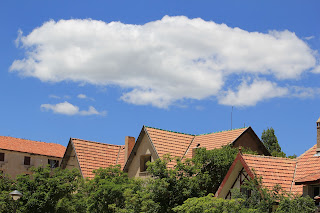
Ifrane's infamous Red, pitched Roofs.

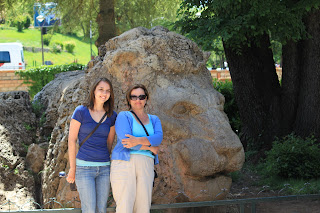
Mom and Megan in front of Ifrane's Lion.

Ifrane in the Distance...

One trip left to Tangier and the north, and it concludes tomorrow!

Saturday, April 30, 2011

Uncovering North Morocco

I haven't been on the road in a while and one of my unexplored "corners" kept nudging me to make a visit.  So, I took a couple days to head east and check out Taza and Oujda for a couple days.  Though limited to a national park, a large hole and an old border town in decline, I've been hankering for the right time to visit it for a while.

And, after my first day on the road, the trip felt good enough to extend and include the Mediterranean coast, northern Rif mountains and a second look of Tangier.  After three days and more than 24 hours of driving, the decision to extend was the right one, but I don't anticipate making it again.  Thankfully, a couple of untouched gems (Tetouan and Sebta) remain unexplored but aren't too far east!

The route (click HERE for map) covered the entirety of northern Morocco and included Tazeeka National Park south of Taza, John the Baptist's Mausoleum in Oujda, the Beni Snassen Mountain Range, the Mediterranean Coast, Rif Mountains, Tangier, Cap Spartel and Hercules' Grotto.  I brought the big camera, so I'll let it do the talking (though I wish I had a poster-printer for some of the shots)...

Tazeeka's Cascades at Ras Al-Oued as seen from the highway some 200 feet above.

 Tazeeka's Gouffre du Friouato: Over 20m wide and 230m deep, its the deepest cavern in North Africa.  

 Discovered in 1935 and still only partially explored.  Look hard and you can see some of the stairs sloping from left to right in the center.

There are 520 steps to the bottom (where the light goes out and a torch-led guide is required).  I didn't opt for the guide...maybe next time.

The drive to Oujda was pretty bland, reminding me of California's Mojave: A thriving provincial capital along the Algerian border until the border closed in 1995, the city's been in decline ever since but still feels modern despite the vast tracks of vacant housing developments.

 Sidi Yahia Mausoleum.  A short drive to Oujda's east, Christians, Jews and Muslims share the privilege of being able to visit the grave of the city's patron saint: John the Baptist.  Yearly, all of them gather for a September patronage.

 The Mosque, open to all creeds due to the Saint's prominence. 

 The chamber room, ornamented, carpeted and holding only the tomb.

 The tomb measures over 7' tall and 15' long.  Covered by dull green linens, I didn't see the actual crypt.

 The Mausoleum's Cemetery.  Below are rows of tombstones behind the wall.

 The Beni Snassen Mountains, located west of Oujda, also are home to a national park, large vistas and winding roads that overlook almond trees, cedar groves, patches of pines and Barbary goats.


 After a wrong turn, I went two-tracking.  Thank God for four-wheel drive!


 Back on flatter ground, the drive along the Mediterranean Coast was much more agreeable, reminding me of California's Big Sur.


A white-washed island fortress near Nador.


 Al-Hoceima's white walls glide up the mountain isthmus 

The only building in miles, a white Mosque west of Al-Hoceima


 Clouds trying to cover the Rif Mountains

 A ray of hope: After 4 winding hours, a much-needed bright spot


The Rif west of the blue city of Chefchaouen, somehow also blue.

 Part of Tangier's port, glistening in the rain.

 The lighthouse at Cap Spartel, Africa's most NW corner overlooking where the Atlantic meets the Mediterranean.

 The inside of Hercules' Grotto, where - as legend has it - the strongman stayed prior to completing one of his 12 feets of strength.

The Grotto's opening, a backwards look at the African continent if you cut off the lower tenth.