It may be official - I'm a bad student of Darija! After missing a second consecutive day of class, I'm pretty certain that I won't finish at the top of my class when my tenure here ends in a week and a half. Today's absence, however, was potentially more justified than yesterday's as the cause was my opting to join another class trip to the Exotic Garden of Salè, which is Rabat's northern sister city on the other side of the ocean inlet.
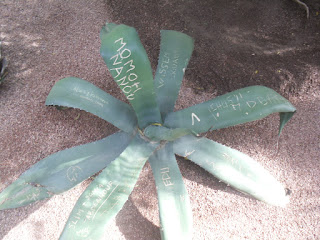
Below are a few photos from the Majorelle garden...the signatures on one of the plants may indicate a continued emphasis on natural preservation!

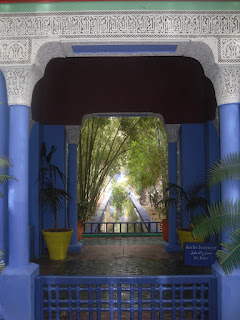
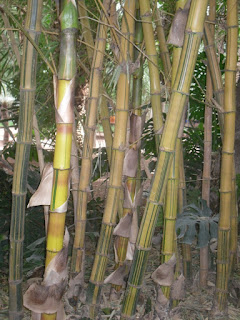
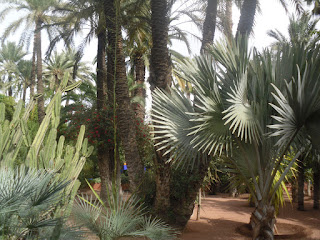
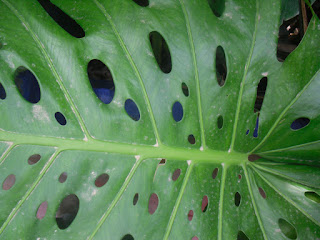
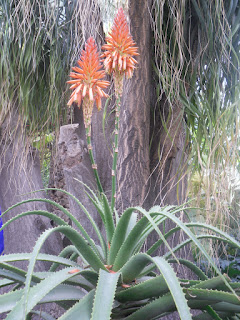
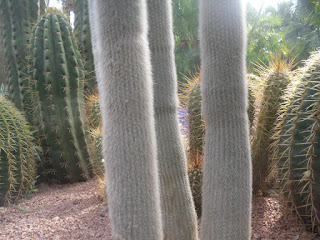
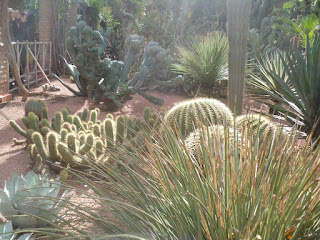
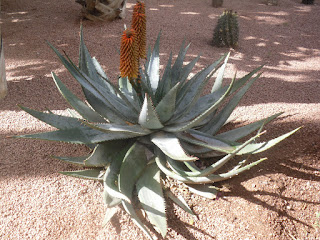
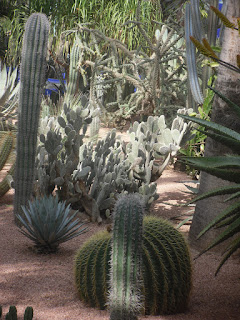
But before I get into today's visit, now seems a good time to describe part of my trip to Marrakesh, which was spent at the Jardin Majorelle in the northwestern part of the new city. For a cost of admission of 40 MAD (Moroccan Dirham: ~ $4.50), garden visitors got to stroll around a small plot of land that houses about 300 different species of wildlife, most of which appearing to belong to the cacti family.
Established as a public garden by Jacques Majorelle, a French-born painter, in 1947 after over twenty years of private cultivation, the park is hailed today as one of the world's most mysterious gardens - a place of rare individual expression and mystical force. Well, that's how the pamphlet described it at least. For me, it was a a welcome bamboo-covered reprieve from the craziness and congestion of the cities traffic.
The various and rare species of plants were interesting to see, the park's design a pleasure to witness, but if there was a mystical force involved, I'll leave it to my tour mates, Christina and Megan, to determine. Though the park had a museum and bookstore, we didn't stop. Maybe next time - I'd like to get a book describing each of the plants to go along with the pictures that I took (and will post at a later date)...
Well, we went there on the 29th of January and, though it was a the first, it wasn't the best as Salè's "الحدائق العجيبية" (Exotic Gardens) were immensely larger, housed more wildlife - both plant and animal - and were a little better to practice the accompanying Arabic, as one of our teachers acted as guide, provided a handout that included a commonly-used word list and each of us on the tour were all about the same level of Arabic fluency.
Salè's gardens were also a French innovation of the 1940's, but more of a internationally-cooperative endeavor than old man Majorelle's Marrakesh vision due to the fact that the idea may have come from France, but the design was German and the subsequent management was Moroccan. Housing more than 1000 species of plants (~40% of which are considered rare), I viewed the whole as a sum of three separate gardens: the front half, the first back quarter and the final quarter.
The front half to me was a tight maze that started at the park's entry and huge bird cage, snaked through densely populated forests, and ended at the park's center. The bird cage was barely populated, but included species of white flamingos, pelicans, ducks, parrots and other quiet chirpers. The "jungle" forest smelled brisk under the shade of huge palm and oil trees and was specked with orange, red, purple and pink flowers between snail-covered cacti.
The first back quarter to me was the park's true center because it housed the only structured garden in the place in a addition to the curator's former residence. Reminding me a lot of Majorelle's vision, I felt a sense of welcome as if the engineers originally intended to make visitors feel a sense of triumph for "conquering" the first half of the park and making it to this, the Jardin Andalou. After crossing a handful of rope bridges, meandering through tight rock faces and passing over various creeks and bodies of water, I felt like I could exhale at the Jardin Andalou's relatively open space and crazy pink boulders.
In contrast to the first back quarter, the second back quarter mimicked the garden's first half; but, instead of plants and flowers lining the tightly-packed trails, lilly-pad and frog-covered ponds, along with their accompanying flower-packed islands, guided the tiny dirt and rock-covered path back and forth until it met back up with the main entrance trail.
Regardless of the differences or similarities, both parks revealed the country's efforts to appreciate natural preservation and educate its citizens and tourists. Given the number of visitors I saw at both places (not many, but certainly more in Marrakesh), I hope the latter effort improves or was an anomaly! Kind of like my efforts to study Darija...
Below are a few photos from the Majorelle garden...the signatures on one of the plants may indicate a continued emphasis on natural preservation!


No comments:
Post a Comment