Seeing the headlights quickly growing in front of us, I brace for impact in the back of our 12-passenger van. As Mudvayne's Determined pumps into my ears, I couldn't have planned a better song to be playing on my IPod as we pass the mule cart to our right and quickly close distance with oncoming traffic. But, we weave back into our lane as quickly as we dodged out of it, and I'm no worse for wear aside from acquiring another unwanted gray hair.
We're on the second leg of our weekend trip nimbly dodging diesel trucks and old Honda's along a winding road in Morocco's northern Rif mountains after dusk. Having just visited Tangier for the afternoon, we're now on our way to the photogenic city of Chefchaouen (shef-shaw-en). Unlike my previous trips to Marrakesh and Fes, I decided to join some of my classmates from my school (Qalam wa Luwh) on a field trip this weekend. I was half-expecting some crazy highway traffic, but I wasn't prepared to be in such a hurry to add to it!

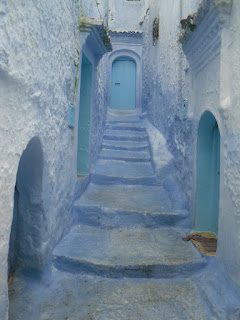
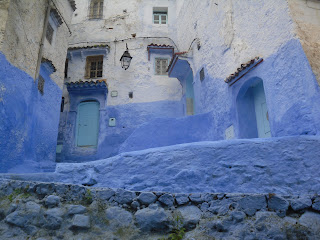
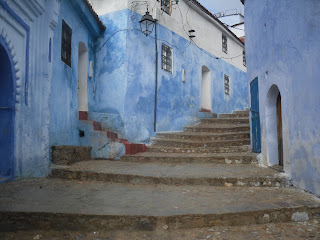
Despite the "exciting" drive, we arrived to the city in one piece ready for an evening and afternoon of photography. But first, a little about this quaint little town. In Berber, the town literally means "Look at the two peaks," referring to the two rugged mountains that overlook the city from the east. The Berbers established the city in 1471 to launch attacks on the neighboring Portuguese. Shortly after, it expanded with the arrival of Muslim and Jewish refugees from the Spanish town of Grenada and remained "little Grenada" for the next 500 years. In the 1930s, Jewish refugees again helped change the dynamic of the city by introducing a pale-blue wash along the cities Andalucian structures. It's this distinguishing trait that keeps the city a tourist destination today.
Just as prominent to me, however, was the strong Spanish heritage that remains in the city. Kids shout "hola!" in the streets, restaurant and shop signs mostly read in Spanish and Arabic, and the facial features of most of the population are fairer than those I've seen to the south. Short on monuments and religious heritage sites, the town doesn't need it, as you'll see - it does pretty well on its own.





Walking the two kilometers from the "Ras L'Maa" (Source of Water) up to the old church and its scenic overview of the city, the mountain's jagged face reminds me of Afghanistan. With a comfortable distance between me and the rest of the tour, my mind drifts to memories of similar walks in Konar province's crisp air and along its gravel footpaths. Memories of our fallen (Garcia, Mattox, King, Pyrtle and Vile) quickly fill my head. Though I wish they were here to see the view, I find comfort in knowing a part of them is with me as I reach the cathedral and behold the city's blue walls below.

A great sight and important memories. After a shorter walk back to the town and a much more agreeable ride back to the country's capital, I started writing. Finishing for the moment, all I can say is that I expected to see some remnants of history this weekend, just not of my own.
We're on the second leg of our weekend trip nimbly dodging diesel trucks and old Honda's along a winding road in Morocco's northern Rif mountains after dusk. Having just visited Tangier for the afternoon, we're now on our way to the photogenic city of Chefchaouen (shef-shaw-en). Unlike my previous trips to Marrakesh and Fes, I decided to join some of my classmates from my school (Qalam wa Luwh) on a field trip this weekend. I was half-expecting some crazy highway traffic, but I wasn't prepared to be in such a hurry to add to it!

The Plaza Uta El-Hammam and the city's old Kasbah
Despite the "exciting" drive, we arrived to the city in one piece ready for an evening and afternoon of photography. But first, a little about this quaint little town. In Berber, the town literally means "Look at the two peaks," referring to the two rugged mountains that overlook the city from the east. The Berbers established the city in 1471 to launch attacks on the neighboring Portuguese. Shortly after, it expanded with the arrival of Muslim and Jewish refugees from the Spanish town of Grenada and remained "little Grenada" for the next 500 years. In the 1930s, Jewish refugees again helped change the dynamic of the city by introducing a pale-blue wash along the cities Andalucian structures. It's this distinguishing trait that keeps the city a tourist destination today.

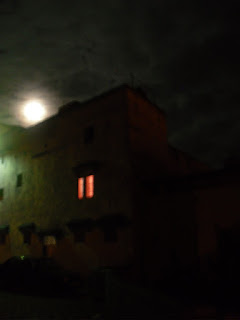
Full Moon over the City
Just as prominent to me, however, was the strong Spanish heritage that remains in the city. Kids shout "hola!" in the streets, restaurant and shop signs mostly read in Spanish and Arabic, and the facial features of most of the population are fairer than those I've seen to the south. Short on monuments and religious heritage sites, the town doesn't need it, as you'll see - it does pretty well on its own.

Andalucian / Spanish Architecture with Red Trim

Most Walls are re-Painted every 6 months

The Medina's Communal Furnace (left)


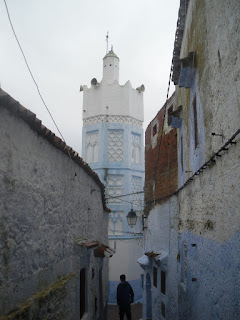
The Grand Mosque (built in the 15th century)

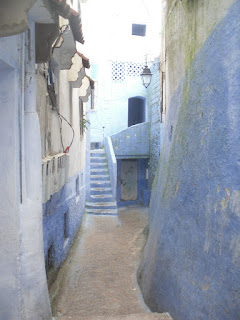
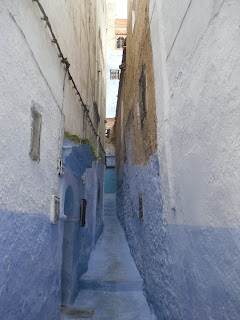
One of the More Infamous Alleys (re-painted every 3 weeks)


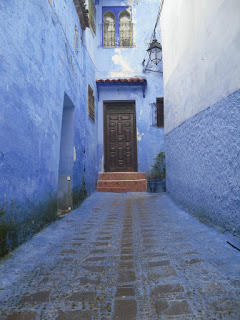
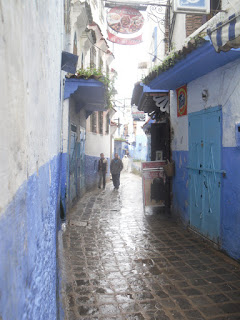
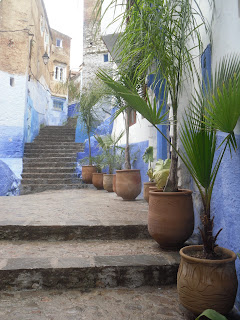
Cobblestone after an Early-Morning Rain


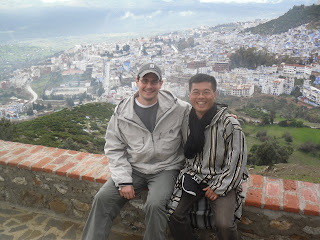
Me and my Roommate for the Evening, Jimmy from Germany

Walking down the Mountain (church upper right)


Walking the two kilometers from the "Ras L'Maa" (Source of Water) up to the old church and its scenic overview of the city, the mountain's jagged face reminds me of Afghanistan. With a comfortable distance between me and the rest of the tour, my mind drifts to memories of similar walks in Konar province's crisp air and along its gravel footpaths. Memories of our fallen (Garcia, Mattox, King, Pyrtle and Vile) quickly fill my head. Though I wish they were here to see the view, I find comfort in knowing a part of them is with me as I reach the cathedral and behold the city's blue walls below.

A great sight and important memories. After a shorter walk back to the town and a much more agreeable ride back to the country's capital, I started writing. Finishing for the moment, all I can say is that I expected to see some remnants of history this weekend, just not of my own.


No comments:
Post a Comment